There are two kinds of kitchen disasters: the ones that end in a fire alarm and the ones that end with a dish that makes you forget you ever had a fear of cooking. I was in the latter situation last week when I tried to recreate my grandma’s beef stew on a slow cooker and ended up with a broth that tasted like watered‑down gravy. The moment the pot hit the stove, I swore I would never again let a simple stew go wrong. I set out to find the ultimate, foolproof slow‑cooker beef stew that would win over even the most skeptical family members.
Picture this: a thick, amber‑gold liquid that coats the meat like a velvet blanket, the aroma of caramelized onions and roasted garlic drifting through the kitchen, and a hearty bite that melts your palate. The texture is a delicate balance—tender beef that still has a bite, root vegetables that retain a slight chew, and a sauce that clings to every forkful. I’ve spent the last month tweaking ratios, testing different cuts of beef, and discovering that a splash of red wine and a touch of tomato paste can turn a bland broth into a flavor explosion.
What sets this version apart is the intentional layering of flavors and the use of a few secret ingredients that most recipes overlook. I added a hint of smoked paprika for depth, a dash of Worcestershire for umami, and a final swirl of heavy cream for silky richness. I also discovered that browning the beef in a hot skillet before adding it to the slow cooker locks in juices and gives the stew a caramelized crust that’s impossible to resist. This isn’t just another “set it and forget it” recipe; it’s a carefully orchestrated symphony of techniques that will make your taste buds sing.
If you’re ready to ditch the generic, run‑of‑the‑mill stew and replace it with something that feels like a culinary revelation, stick with me. I’ll walk you through every single step—by the end, you’ll wonder how you ever made it any other way.
What Makes This Version Stand Out
- Flavor Depth: The combination of caramelized onions, smoked paprika, and a splash of red wine creates a complex flavor profile that lingers long after the last bite.
- Texture Mastery: The slow‑cooking method tenderizes the beef while keeping vegetables slightly firm, giving a satisfying bite.
- Time Efficiency: Prep takes only 15 minutes, and the stew cooks in the slow cooker for 8 hours on low—perfect for a busy weekday.
- Make‑ahead Friendly: The stew can be made a day ahead, flavors intensify overnight, and it reheats beautifully.
- Ingredient Quality: Using high‑quality beef chuck and fresh root vegetables elevates the dish beyond the average stew.
- Versatility: It pairs wonderfully with crusty bread, mashed potatoes, or a light salad, making it suitable for any occasion.
- Audience Appeal: Even the most skeptical family members will be left asking for seconds—yes, I dare you to taste this and not go back for seconds.
- Ease of Use: The recipe requires minimal hands‑on time, so you can focus on other tasks while the flavors develop.
Alright, let's break down exactly what goes into this masterpiece...
Inside the Ingredient List
The Flavor Base
At the heart of this stew is a robust flavor base that starts with a generous amount of onions, garlic, and a splash of red wine. The onions are diced and caramelized in olive oil until they turn golden brown, releasing a sweet, nutty aroma that sets the tone for the entire dish. Garlic is minced and added during the browning step to avoid bitterness. The red wine not only adds acidity but also brings a subtle fruitiness that balances the richness of the beef. If you’re not a fan of wine, you can substitute with a bit of beef broth and a squeeze of lemon juice for a similar tang.
The Texture Crew
Root vegetables—carrots, potatoes, and celery—are the texture crew, each bringing its own bite. Carrots add a natural sweetness and vibrant color, potatoes provide heartiness and absorb the stew’s juices, while celery adds a crisp, herbal note that lifts the dish. These vegetables are cut into uniform pieces to ensure even cooking. If you prefer a smoother consistency, you can puree half of the stew and then stir it back in.
The Unexpected Star
The unexpected star in this recipe is the heavy cream, added at the very end. It lends a silky finish that contrasts beautifully with the robust flavors, creating a velvety mouthfeel. The cream also helps to mellow the acidity from the wine and tomato paste, resulting in a well-rounded sauce. For a lighter version, you can replace the cream with Greek yogurt or coconut milk.
The Final Flourish
The final flourish includes a sprinkle of smoked paprika, a dash of Worcestershire sauce, and fresh thyme. These ingredients add depth, umami, and a subtle smoky undertone that elevates the stew beyond ordinary. The thyme is added early in the slow‑cooking process, allowing its flavor to infuse throughout. The paprika is added just before serving to preserve its bright color and aroma. Together, these final touches transform a simple stew into a memorable meal.
Everything's prepped? Good. Let's get into the real action...
The Method — Step by Step
- Browning the Beef: Heat a large skillet over high heat, add the olive oil, and let it shimmer. Add the beef cubes in batches, leaving space so they brown rather than steam. Sear each side until a deep brown crust forms, about 3-4 minutes per side. This step locks in juices and creates a caramelized flavor that will permeate the stew. I swear, that sizzle when it hits the pan? Absolute perfection.
- Caramelizing the Onions: In the same skillet, reduce the heat to medium, add a bit more oil if needed, and toss in the diced onions. Cook until translucent and golden, about 8 minutes, stirring occasionally. The onions will release their natural sugars, creating a sweet base for the stew. If they start to burn, add a splash of water to loosen them.
- Deglazing: Pour in the red wine to deglaze the pan, scraping up all the browned bits. Let the wine reduce by half, concentrating the flavor. This trick ensures no savory bits get lost and adds a subtle depth that’s hard to replicate.
- Assembling the Slow Cooker: Transfer the browned beef and caramelized onions to the slow cooker. Add the minced garlic, sliced carrots, cubed potatoes, sliced celery, and any optional ingredients like paprika or a pinch of salt. Pour in the beef broth, the reduced wine, tomato paste, Worcestershire sauce, thyme, and bay leaves. Stir everything gently to combine.
- Cooking: Cover and cook on low for 8 hours, or on high for 4 hours. The long, low heat breaks down collagen in the beef, turning it into a melt‑in‑your‑mouth texture while the vegetables become tender yet still hold their shape. Check the stew at the 6‑hour mark; if you need a thicker sauce, stir in the flour slurry (flour mixed with a little water) and let it cook for another 30 minutes.
- Finishing Touches: Once the stew is done, remove the bay leaves and discard. Stir in the heavy cream and adjust seasoning with salt and pepper to taste. Let it simmer for an additional 10 minutes to blend the flavors. The cream will give the sauce a silky sheen that’s simply irresistible.
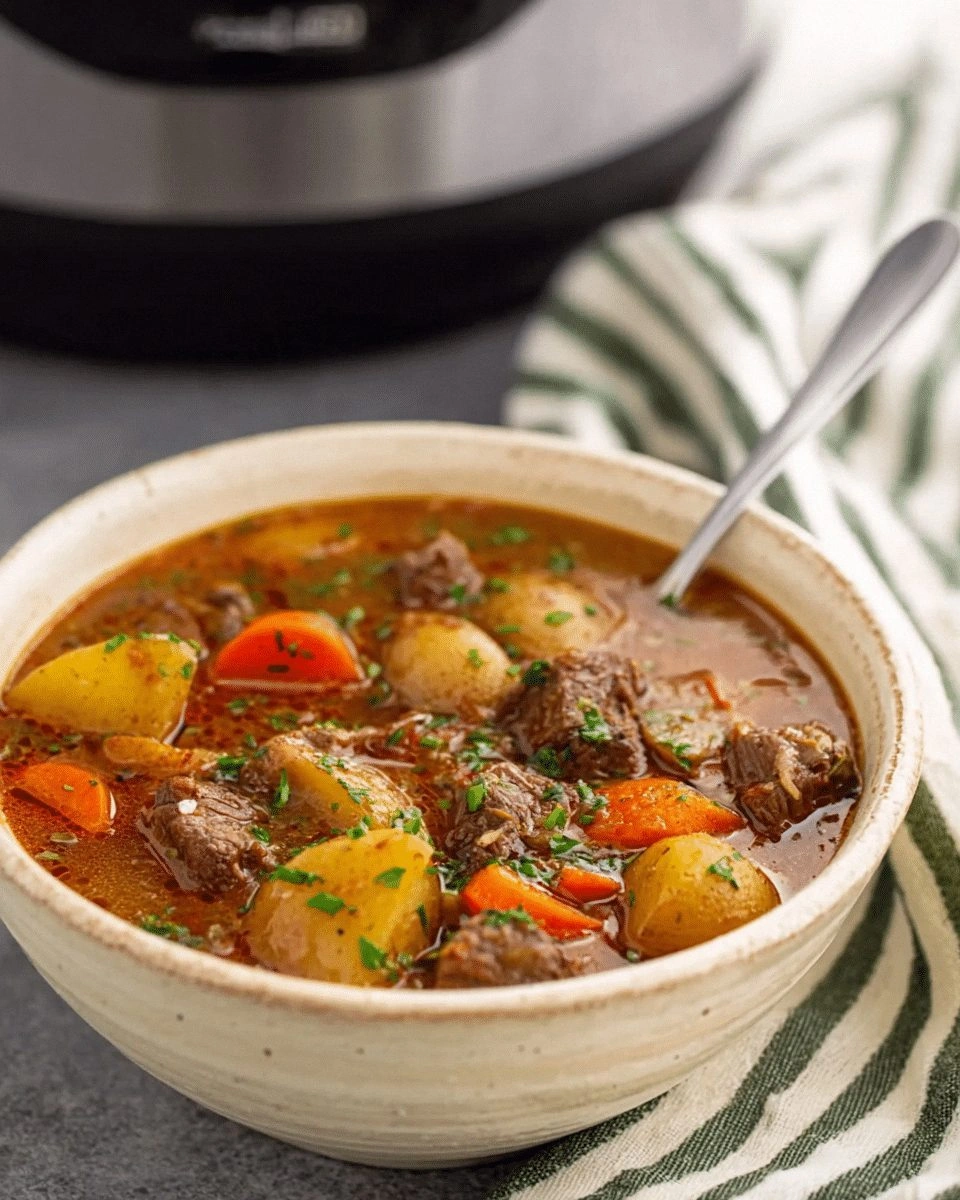
- Serving: Ladle the stew into bowls, ensuring each spoonful has a generous amount of beef, vegetables, and sauce. Garnish with a sprinkle of fresh parsley or a drizzle of olive oil if desired. Serve hot with crusty bread or over a bed of mashed potatoes.
- Optional Garnish: For a touch of color and freshness, add a handful of chopped fresh dill or a squeeze of lemon juice just before serving. The acidity brightens the stew and cuts through the richness.
That's it — you did it. But hold on, I've got a few more tricks that'll take this to another level...
Insider Tricks for Flawless Results
The Temperature Rule Nobody Follows
Many people cook stew on high for convenience, but low and slow is the secret to tender beef. The low heat allows collagen to break down into gelatin, giving the meat a silky texture. If you’re short on time, a high setting will work, but you’ll need to check the beef after 3 hours; if it’s still tough, let it continue on low.
Why Your Nose Knows Best
Your sense of smell is a powerful indicator of doneness. When the stew starts to bubble gently and the aroma is rich and complex, it’s a sign the flavors have melded. If the broth is too thin, let it cook uncovered for the last 30 minutes to reduce.
The 5‑Minute Rest That Changes Everything
After removing the slow cooker from heat, let the stew sit, covered, for five minutes. This allows the juices to redistribute, ensuring each bite is evenly seasoned and the meat stays moist.
The Creamy Twist
If you prefer a lighter stew, skip the heavy cream and finish with a splash of Greek yogurt or a drizzle of olive oil. The yogurt adds tang without heaviness, while olive oil gives a silky finish.
The Quick Thickener
Instead of flour, use a cornstarch slurry (1 tablespoon cornstarch mixed with 2 tablespoons water). Stir it in during the last 10 minutes and let it thicken the sauce without adding a floury aftertaste.
The Flavor Boost
A pinch of smoked paprika during the browning step adds a subtle smokiness that pairs wonderfully with the beef. It also deepens the color of the final dish.
Creative Twists and Variations
This recipe is a playground. Here are some of my favorite ways to switch things up:
Herb Garden Version
Swap the thyme for a mix of rosemary, sage, and oregano. Add fresh basil at the end for a bright, aromatic finish. This variation works great with a side of roasted zucchini.
Spicy Kick
Add a diced jalapeño or a pinch of cayenne pepper during the browning step. The heat pairs nicely with the sweetness of the carrots and the richness of the beef.
Mushroom Medley
Replace half of the carrots with sliced button mushrooms. The earthy flavor of the mushrooms adds depth and complements the beef.
Cheesy Finale
Stir in a handful of shredded cheddar or Gruyère during the last 10 minutes of cooking. The cheese melts into the stew, giving it a creamy, indulgent texture.
Vegan Takeaway
Use seitan or tempeh instead of beef, and replace the beef broth with vegetable broth. Add a splash of soy sauce for umami, and finish with a swirl of coconut milk.
Asian Fusion
Replace the red wine with rice wine, add a tablespoon of hoisin sauce, and finish with chopped scallions and a drizzle of sesame oil. The result is a sweet, savory, and slightly sweet stew with an Asian twist.
Storing and Bringing It Back to Life
Fridge Storage
Cool the stew completely before transferring it to airtight containers. Store in the refrigerator for up to 4 days. The flavors will deepen overnight, making it even more delicious.
Freezer Friendly
Divide the stew into single‑serving portions and freeze for up to 3 months. Thaw overnight in the refrigerator and reheat gently on the stovetop, adding a splash of broth if it looks dry.
Best Reheating Method
Reheat the stew in a saucepan over low heat, stirring occasionally. Add a tiny splash of water or broth before reheating—this steams the stew back to perfection without drying it out.