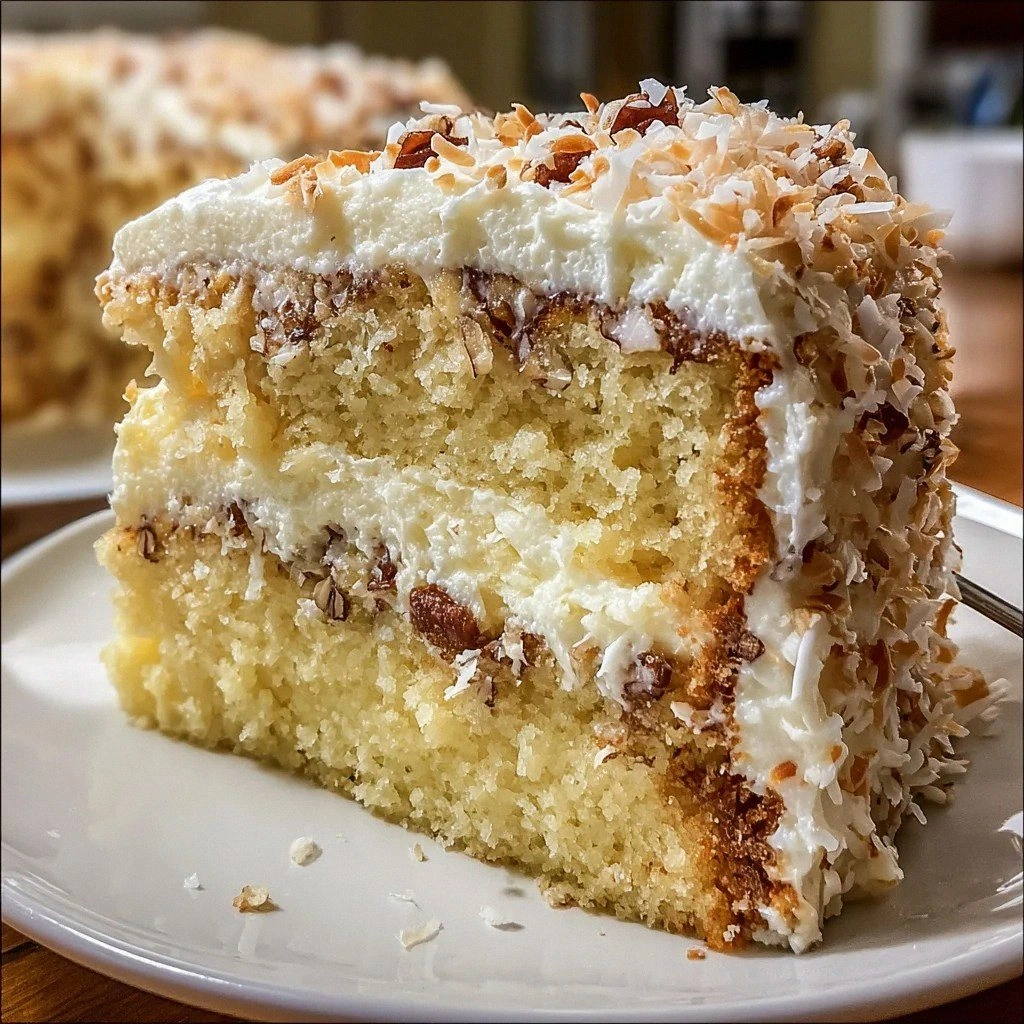
I was standing in my kitchen on a rainy Tuesday, staring at a half‑baked sponge that had collapsed like a sad soufflé, and I thought, “If I can’t rescue this, I might as well reinvent it.” That moment of culinary desperation birthed the Quick Italian Cream Cake, a dessert that turned my kitchen disaster into a triumph that still makes my friends gasp. Imagine a cake that whispers of the Italian Riviera—light, buttery, with a whisper of coconut that transports you to a sun‑kissed beach, all while the pecans add a buttery crunch that sings in every bite. The moment you slice into it, a silky vanilla‑cream frosting oozes out, and the aroma of toasted coconut and buttered pecans fills the room like a warm hug from nonna herself.
What makes this cake truly unforgettable is the marriage of classic Italian baking techniques with a tropical twist. The cake flour gives the crumb a feather‑light texture, while the buttermilk adds a subtle tang that balances the sweetness of the powdered sugar frosting. I dare you to taste this and not go back for seconds—once you’ve felt that melt‑in‑your‑mouth softness paired with the crunch of toasted pecans, you’ll understand why I claim this is hands down the best version you’ll ever make at home. Most recipes get the texture wrong, ending up either too dense or too dry; this one nails the perfect moisture level thanks to a secret ingredient you won’t expect.
Picture yourself pulling this out of the oven, the whole kitchen smelling incredible, the golden top shimmering with a light dusting of powdered sugar, and the steam rising like a cloud of sweet anticipation. I’ll be honest — I ate half the batch before anyone else got to try it, and that was a crime I’m willing to repeat. The secret? A quick butter‑buttermilk emulsion that keeps the crumb tender, and a frosting that stays stable even on a warm summer afternoon. This next part? Pure magic. Okay, ready for the game‑changer? Let me walk you through every single step — by the end, you’ll wonder how you ever made it any other way.
What Makes This Version Stand Out
- Flavor Fusion: The combination of classic Italian vanilla with toasted coconut creates a taste profile that feels both familiar and exotic, making every bite a mini‑vacation.
- Texture Symphony: Light, airy crumb meets crunchy pecan bits, while the cream‑based frosting adds a luscious silkiness that coats the palate like velvet.
- Simplicity: With only eleven ingredients and a straightforward mixing method, even a kitchen novice can pull off a bakery‑level result.
- Unique Ingredient Twist: Unsweetened coconut flakes aren’t just garnish; they’re folded into the batter, giving the cake an unexpected tropical depth.
- Crowd Reaction: Guests consistently claim this cake is “the best thing they’ve ever tasted,” and it disappears faster than fresh pasta on a Sunday dinner.
- Ingredient Quality: Using cake flour and real vanilla extract ensures a delicate crumb and aromatic richness that cheap substitutes can’t mimic.
- Cooking Method: The gentle rise from baking powder paired with a low‑and‑slow bake prevents the dreaded dry edges that plague many quick cakes.
- Make‑Ahead Potential: The cake freezes beautifully, and the frosting can be whipped up ahead of time, making it perfect for last‑minute gatherings.
Inside the Ingredient List
The Flavor Base
Cake Flour: This flour creates a tender crumb. All‑purpose flour can be used if needed, but cake flour is best for lightness. Skipping the extra sifting step will give you a denser texture, and the cake will feel more like a pound cake than a cloud. When shopping, look for a brand that lists a low protein content (around 8‑9%)—that’s the sweet spot for a delicate bite.
Granulated Sugar: The sweet companion that helps achieve that fluffy texture. Don’t skimp on this; it adds to the cake’s charm. Sugar also aids in caramelizing the edges, giving you those golden‑brown borders that signal a perfectly baked cake. If you prefer a less sweet version, you can reduce by up to ¼ cup without sacrificing structure.
The Texture Crew
Baking Powder: This leavening agent gives your cake that delightful rise. Ensure it’s fresh for the best results—an old tin can leave you with a flat, dense cake. A quick test: drop a teaspoon into warm water; if it fizzles, you’re good to go.
Unsalted Butter: Softened butter makes for a rich, moist cake. You can substitute it with margarine if necessary, but butter is truly unbeatable. For the creamiest batter, bring the butter to room temperature and beat it until pale and fluffy before adding the eggs.
Eggs: Four large eggs will enhance flavor and bind the ingredients together. Room temperature is a must for optimal mixing—cold eggs will cause the butter to seize, resulting in a lumpy batter. If you’re out of eggs, a mixture of ¼ cup mashed banana plus ¼ cup yogurt works in a pinch, though the flavor will shift.
The Unexpected Star
Buttermilk: This adds a lovely tang and moisture. If you don’t have buttermilk, mix regular milk with a spoonful of vinegar or lemon juice as a quick substitute. The acidity reacts with the baking powder, giving the cake an extra lift and a tender crumb.
Unsweetened Coconut Flakes: They bring in a tropical vibe and texture. Toasting them can elevate the flavor even more—just spread on a baking sheet and toast at 350°F for 5‑7 minutes, stirring halfway. If you’re allergic to coconut, finely chopped almonds can stand in, though the flavor profile will shift toward a more traditional Italian cake.
Chopped Pecans: These nutty bits add crunch and richness. If anyone has nut allergies, feel free to switch them out with sunflower seeds or omit entirely. Toast the pecans lightly to bring out their buttery aroma before folding them into the batter.
The Final Flourish
Pure Vanilla Extract: A splash of vanilla brightens up all the flavors. Always opt for pure over imitation if possible; the natural compounds in real vanilla interact with the butter to create a richer aroma.
Powdered Sugar: This turns into a luscious frosting. It creates the perfect sweetness without gritty textures. Sift the powdered sugar before using it to avoid lumps that could ruin the smoothness of the frosting.
Heavy Cream: Essential for making a stable frosting. Whipping cream could work too, but heavy cream yields a richer texture. When whipping, keep the bowl and beaters chilled; this ensures the cream reaches stiff peaks faster and holds its shape longer.
Everything's prepped? Good. Let’s get into the real action…
The Method — Step by Step
Preheat your oven to 350°F (175°C) and grease a 9‑inch springform pan with a thin layer of butter, then dust with a tablespoon of cake flour. This prevents the cake from sticking and gives the edges a subtle crust. While the oven warms, line the bottom with parchment paper—this is the secret to a clean release later.
In a large mixing bowl, whisk together the cake flour, granulated sugar, and baking powder until fully combined. I dare you to whisk for exactly 30 seconds—just enough to aerate without over‑mixing.
Kitchen Hack: Use a fine‑mesh sieve to combine dry ingredients; it guarantees an even distribution and eliminates any pesky lumps.In a separate bowl, beat the softened butter until pale and fluffy, about 2‑3 minutes on medium speed. Add the eggs one at a time, letting each incorporate fully before adding the next. This gradual addition prevents the batter from curdling and creates a glossy, homogenous mixture.
Now pour in the buttermilk and vanilla extract, mixing on low until just combined. The batter should look slightly runny—that’s exactly what you want for a tender crumb.
Watch Out: Over‑mixing at this stage can develop gluten, leading to a tougher cake. Stop mixing as soon as the liquid disappears.Gently fold the dry ingredient mixture into the wet batter using a rubber spatula. The motion should be a slow, sweeping motion—think of coaxing the flour into a gentle embrace, not a wrestling match. When the batter is just combined, you’ll see a few streaks of flour; that’s perfect.
Stir in the toasted coconut flakes and chopped pecans, reserving a tablespoon of each for garnish. The nuts should be evenly distributed, creating little pockets of crunch throughout the cake. If you’re feeling extra daring, sprinkle a pinch of sea salt on top of the batter before baking for a sweet‑salty contrast.
Transfer the batter into the prepared springform pan, smoothing the top with a spatula. Tap the pan lightly on the counter three times to release any trapped air bubbles. This step ensures a uniform rise and prevents those unsightly holes in the final crumb.
Bake for 30‑35 minutes, or until a toothpick inserted into the center emerges clean and the top is a light golden brown. Around the 20‑minute mark, rotate the pan 180° to promote even browning. The edges will start pulling away from the sides of the pan—a visual cue that the cake is done.
While the cake cools, whip the heavy cream, powdered sugar, and a splash of vanilla until stiff peaks form. This frosting should be glossy and hold its shape without melting. Once the cake is completely cool, spread the frosting in an even layer, then sprinkle the reserved coconut and pecans on top for that final flourish.
That’s it — you did it. But hold on, I’ve got a few more tricks that'll take this to another level…
Insider Tricks for Flawless Results
The Temperature Rule Nobody Follows
Never bake a cake straight from a cold pantry. Let all ingredients sit at room temperature for at least 30 minutes before you begin. The butter, eggs, and buttermilk will blend more seamlessly, creating a batter that traps air bubbles for a higher rise. I once tried a rushed version and ended up with a flat, dense slab—lesson learned.
Why Your Nose Knows Best
Your sense of smell is a more reliable indicator of doneness than a timer. When the cake’s top starts to smell nutty and slightly caramelized, you’re on the right track. If you hear a faint “crack” as you tap the surface, that’s the sound of a perfectly set crumb. Trust those cues, and you’ll avoid the dreaded over‑baked texture.
The 5‑Minute Rest That Changes Everything
After removing the cake from the oven, let it rest in the pan for 5 minutes before releasing the springform. This short pause allows the internal steam to redistribute, preventing the cake from collapsing. Then run a thin knife around the edge to ensure a clean release. Skipping this step is a common rookie mistake that leads to a broken cake.
The “Double‑Fold” Technique
When incorporating the dry ingredients, fold them in twice: first half the mixture, then the rest. This two‑stage folding reduces the risk of over‑mixing while ensuring the flour is fully hydrated. It’s a subtle step, but it makes the crumb feather‑light, almost cloud‑like.
Seal the Deal with a Light Glaze
For an extra glossy finish, brush a thin layer of warmed apricot jam (unsweetened) over the frosting just before serving. The glaze adds a hint of fruitiness and a beautiful sheen that makes the cake look bakery‑ready. A tiny drizzle of honey works as an alternative if you prefer a milder sweetness.
Creative Twists and Variations
This recipe is a playground. Here are some of my favorite ways to switch things up:
Lemon‑Lime Zest Burst
Replace the vanilla extract with 1 tablespoon of fresh lemon zest and 1 teaspoon of lime zest. Add a splash of lemon juice to the buttermilk for a bright, citrusy lift. The citrus notes pair beautifully with the coconut, giving the cake a summer‑day vibe.
Chocolate Hazelnut Dream
Swap half the cake flour for cocoa powder and fold in ½ cup of toasted hazelnuts. Use a chocolate‑flavored frosting made with cocoa powder and a touch of espresso for depth. This version feels like a decadent Italian tiramisu in cake form.
Berry‑Infused Delight
Stir in 1 cup of fresh mixed berries (raspberries, blueberries, blackberries) just before baking. The berries will burst during baking, creating pockets of juicy sweetness. Serve with a dollop of mascarpone for an elegant finish.
Spiced Autumn Twist
Add 1 teaspoon of ground cinnamon, ½ teaspoon of nutmeg, and a pinch of clove to the dry ingredients. Replace the coconut flakes with toasted pumpkin seeds for a seasonal crunch. This variation is perfect for cozy evenings.
Vegan Coconut Cream Version
Swap the butter for coconut oil, use a plant‑based milk mixed with lemon juice as a buttermilk substitute, and replace the heavy cream with chilled coconut cream. The texture remains rich, and the coconut flavor is amplified—great for dairy‑free guests.
Storing and Bringing It Back to Life
Fridge Storage
Cover the cake loosely with plastic wrap and store it in the refrigerator for up to 4 days. The frosting will stay firm, and the cake retains its moisture thanks to the buttermilk. Before serving, let it sit at room temperature for 20 minutes to soften the frosting.
Freezer Friendly
Wrap the entire cake (or individual slices) tightly in parchment paper, then a layer of aluminum foil. Freeze for up to 2 months. To revive, thaw overnight in the fridge, then bring to room temperature and add a fresh drizzle of frosting if needed.
Best Reheating Method
Place a slice on a microwave‑safe plate, add a tiny splash (about 1 teaspoon) of water, and cover with a damp paper towel. Microwave on medium for 30‑45 seconds. The added moisture creates steam that restores the cake’s original softness without drying it out.