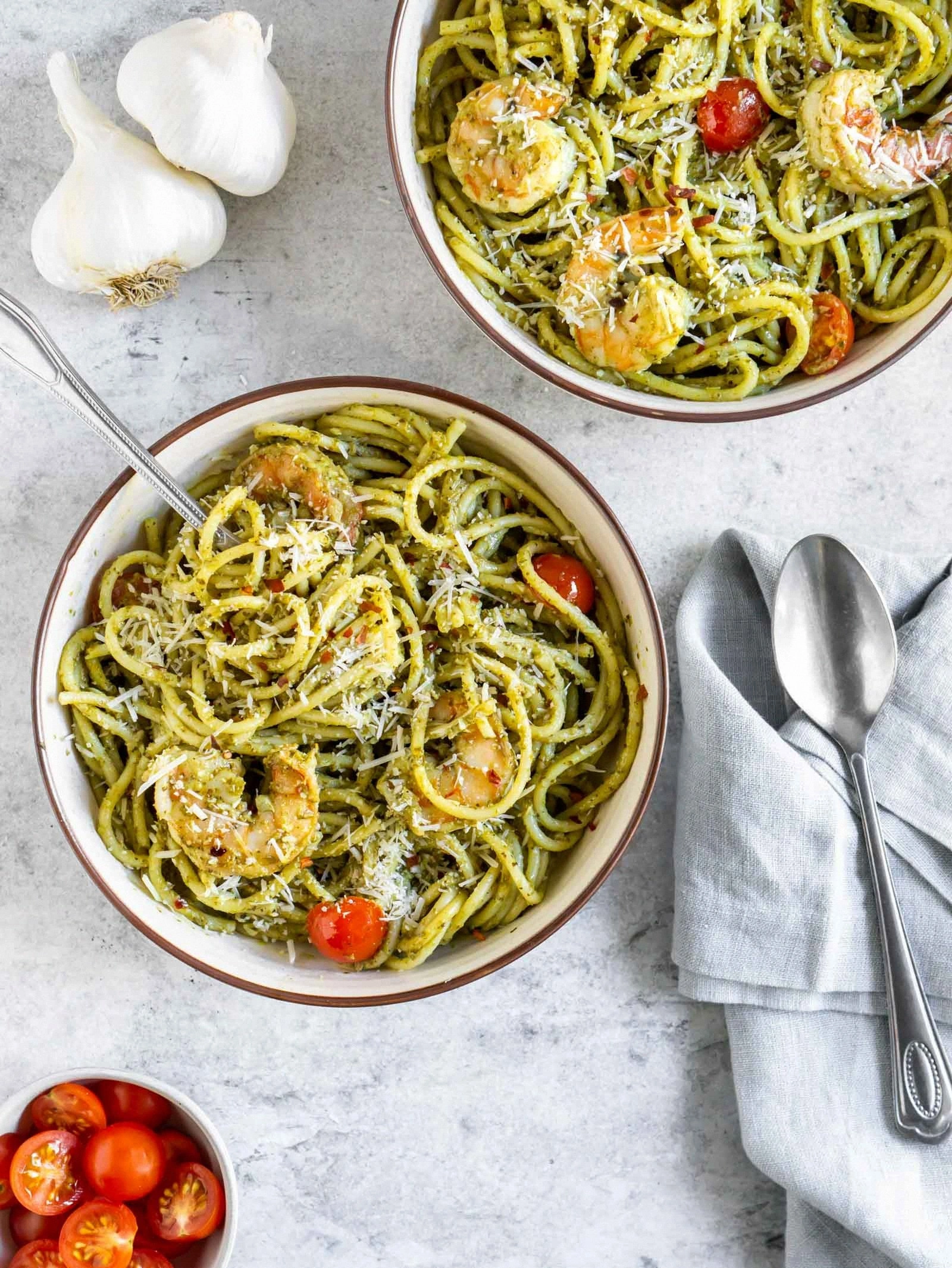
I was staring at the empty pan, the kitchen smelling faintly of last night’s burnt toast, and suddenly a craving burst through me like a rogue fireworks display. “We need something that screams, ‘I’m alive!’” I declared to the empty counter. That was the moment I discovered the creamy basil pesto shrimp pasta that would change my dinner routine forever. Picture this: a bright green pesto that melts into a silky cream, clinging to bucatini like velvet, while succulent shrimp pop with a subtle heat from red pepper flakes. The moment the sauce hits the pasta, the kitchen fills with a buttery aroma that makes the air feel thicker, like a warm hug wrapped in garlic and basil.
I’ll be honest—when I first tossed the shrimp into the pan, I could hear the sizzle like a tiny drumbeat announcing a feast. The shrimp turned from translucent to a rosy pink, each bite bursting with sweet ocean flavor that’s almost impossible to describe without tasting it again. The cherry tomatoes burst into juicy pops, releasing a burst of sweet acidity that cuts through the richness. And the basil? It’s not just a garnish; it’s a living, breathing herb that adds a fresh, almost citrusy note that lifts the entire dish. If you’ve ever struggled to find a dinner that feels both indulgent and healthy, you’re not alone—this is the fix.
What makes this version stand out is the way the ingredients dance together. The pesto isn’t just a sauce; it’s the foundation that gives the dish its signature green hue and a nutty, garlicky backbone. Heavy cream is folded in, not to drown the flavors but to create a luxurious silkiness that coats each strand of pasta. The shrimp are sautéed just enough to keep them tender, not rubbery, and the cherry tomatoes add a burst of color and a pop of brightness that keeps the dish from feeling too heavy. I dare you to taste this and not go back for seconds. This is hands down the best version you’ll ever make at home.
Picture yourself pulling this out of the pot, the whole kitchen smelling incredible, and the first forkful sending a wave of savory, creamy, basil‑infused delight across your palate. The sauce clings to the bucatini like a silky blanket, and the shrimp’s juicy texture contrasts perfectly with the glossy, smooth sauce. And that final touch of basil and a hint of red pepper flakes—just enough heat to make your taste buds sing without overwhelming the dish. That sizzle when it hits the pan? Absolute perfection. Let me walk you through every single step—by the end, you’ll wonder how you ever made it any other way.
What Makes This Version Stand Out
- Flavor Depth: The combination of pesto and heavy cream creates a multi‑layered taste that’s both savory and subtly sweet. The basil’s herbal brightness cuts through the richness, while the garlic adds a sharp, aromatic punch.
- Texture Harmony: Bucatini’s long, hollow strands soak up the sauce, while the shrimp remain firm and juicy. Cherry tomatoes burst with each bite, providing a pleasant contrast to the creamy base.
- Visual Appeal: The dish’s vibrant green pesto, bright red tomatoes, and glossy shrimp create a plate that looks as good as it tastes. The presentation is simple yet striking.
- Time Efficiency: The entire process takes under an hour, making it a perfect weeknight dinner without compromising on flavor or quality.
- Ingredient Quality: Using Filippo Berio Classic Pesto guarantees a consistent, high‑quality flavor profile, while fresh shrimp and basil elevate the dish to a gourmet level.
- Make‑Ahead Potential: The sauce can be prepared a day in advance, allowing the flavors to meld and making it a great option for busy schedules.
- Crowd Reaction: Guests are often surprised by how restaurant‑style this dish feels, with many asking for the recipe after the first bite.
- Versatility: Swap the shrimp for chicken or keep it vegetarian with tofu, and you’ll still get the same luxurious sauce.
Alright, let’s break down exactly what goes into this masterpiece…
Inside the Ingredient List
The Flavor Base
Filippo Berio Classic Pesto is the heart of this dish. Its blend of basil, pine nuts, garlic, and Parmesan creates a robust, aromatic foundation that’s unmistakable. The pesto’s natural oil content ensures the sauce glides smoothly over the pasta, preventing any clumping. If you’re on a budget, a homemade pesto can work, but the commercial version guarantees consistency and a depth of flavor that’s hard to replicate.
The Texture Crew
Bucatini pasta, with its hollow center, is perfect for absorbing the sauce. Its thick, chewy bite contrasts beautifully with the tender shrimp, creating a satisfying mouthfeel. When cooking bucatini, remember to reserve a cup of pasta water; this starchy liquid helps bind the sauce and gives it that silky finish. If you can’t find bucatini, pappardelle or fettuccine will work, but the hollow shape gives this dish its unique character.
The Unexpected Star
Cherry tomatoes add a pop of color and a burst of natural sweetness that cuts through the richness of the cream. They also provide a juicy texture that breaks the monotony of the pasta. For a seasonal twist, try using sun‑dried tomatoes, which add a chewy, umami punch. If you’re looking to reduce calories, you can halve the amount and replace them with roasted bell peppers.
The Final Flourish
Fresh chopped basil is the finishing touch that elevates the dish from good to unforgettable. It’s not just about the color; basil’s essential oils bring a bright, slightly peppery finish that lingers on the palate. Adding a handful of basil right before serving keeps the herb’s flavor fresh and vibrant. If you’re out of basil, a sprinkle of parsley can offer a milder, yet still refreshing, alternative.
Everything’s prepped? Good. Let’s get into the real action…
The Method — Step by Step
- Prep the Pasta: Bring a large pot of salted water to a rolling boil. Add the bucatini and cook until al dente, about 10 minutes. Reserve a cup of pasta water before draining. The pasta should be firm to the bite, not mushy.
- Season the Shrimp: Pat the shrimp dry with paper towels. Toss them in a pinch of salt, pepper, and the red pepper flakes. This step ensures the shrimp flavor is bright and balanced.
- Sauté the Shrimp: Heat a large skillet over medium‑high heat. Add a splash of olive oil, then the shrimp. Cook for 2–3 minutes on each side until pink and opaque. The shrimp should not overcook or become rubbery.
- Make the Sauce: Reduce the heat to medium. Add the heavy cream to the skillet, letting it simmer for a minute. Stir in the Filippo Berio Classic Pesto, whisking until the sauce is smooth and glossy.
- Incorporate Tomatoes: Add the cherry tomatoes to the skillet. They’ll soften slightly but still retain a bite. Cook for an additional 2 minutes, letting their juices mingle with the sauce.
- Combine Pasta and Sauce: Add the drained bucatini to the skillet, tossing to coat. If the sauce seems too thick, add a splash of the reserved pasta water to loosen it. The pasta should be fully coated, each strand glistening.
- Finish with Basil: Stir in the fresh chopped basil. The heat from the skillet will wilt the basil, releasing its fragrant oils without turning it mushy.
- Serve Immediately: Plate the pasta in warm bowls, ensuring a generous amount of shrimp and sauce on each. Garnish with a light drizzle of olive oil and a few basil leaves for an extra pop of color.
That’s it — you did it. But hold on, I’ve got a few more tricks that’ll take this to another level…
Insider Tricks for Flawless Results
The Temperature Rule Nobody Follows
Keep the skillet on medium heat when adding the cream and pesto. A high heat will scorch the cream and create a bitter taste. The right temperature ensures a silky, cohesive sauce that coats every noodle. I’ve tried this once on high and the sauce turned into a thick, burnt mess.
Why Your Nose Knows Best
Before adding the basil, give the dish a quick sniff. The aroma of fresh basil will tell you if it’s still bright or has lost its punch. If it smells flat, add a little extra basil or a splash of lemon juice to revive the scent. The nose is your best judge of freshness.
The 5‑Minute Rest That Changes Everything
Let the pasta sit in the skillet for 5 minutes after mixing. This rest period allows the noodles to absorb the sauce fully, creating a richer, more integrated flavor. The rest also lets the shrimp finish cooking in the residual heat, keeping them tender.
Use Pasta Water Wisely
Reserve pasta water before draining. The starchy liquid can be added to the sauce to adjust thickness and help bind the sauce to the noodles. It’s a classic technique that turns a good dish into a great one.
Add a Splash of Lemon Juice
A teaspoon of fresh lemon juice brightens the sauce and balances the cream’s richness. The acidity cuts through the heaviness, making the dish feel lighter on the palate. Don’t be shy—this small addition makes a big difference.
Serve in Warm Bowls
Warm your bowls in the oven at 200°F for 5 minutes before serving. Warm bowls keep the dish hotter for longer, allowing the flavors to develop as you eat. It’s a simple trick that elevates the dining experience.
Creative Twists and Variations
This recipe is a playground. Here are some of my favorite ways to switch things up:
Mediterranean Twist
Swap cherry tomatoes for sun‑dried tomatoes and add a handful of Kalamata olives. The olives bring a briny depth, while the sun‑dried tomatoes offer chewy sweetness. It’s a perfect summer version that still feels indulgent.
Creamy Spinach Upgrade
Add a cup of fresh spinach during the last minute of cooking. The spinach wilts, adding a subtle earthiness and a pop of color. This version is great for those who want a green, nutrient‑dense meal.
Pesto Swap
Use a sun‑flower seed or almond pesto for a nutty, slightly sweet flavor profile. It’s a great way to keep the dish fresh if you’ve already used basil pesto elsewhere.
Vegetarian Delight
Replace the shrimp with grilled tofu or sautéed mushrooms. The tofu will soak up the creamy sauce, while mushrooms add an earthy umami. Both options keep the dish hearty and satisfying.
Spicy Kick
Increase the red pepper flakes to 1/2 teaspoon or add a dash of hot sauce. The extra heat pairs beautifully with the cream, creating a balanced, bold flavor that will keep you coming back.
Lemon‑Herb Finale
Finish with a drizzle of lemon‑infused olive oil and a sprinkle of fresh parsley. The lemon oil brightens the dish, while parsley adds a fresh, herbaceous note that complements the basil.
Storing and Bringing It Back to Life
Fridge Storage
Store leftovers in an airtight container in the refrigerator for up to 3 days. Keep the pasta and sauce separate if possible; combine them just before reheating to maintain texture. The sauce will thicken slightly when chilled, so add a splash of milk or cream to loosen it.
Freezer Friendly
For longer storage, freeze the sauce and pasta separately in freezer‑safe containers. The pasta will freeze for up to 2 months, while the sauce can be kept for 1 month. When ready to eat, thaw overnight in the fridge.
Best Reheating Method
Reheat the sauce over low heat, stirring frequently, until warmed through. Add a tiny splash of water or milk to restore its silky consistency. The pasta can be reheated in a microwave or a skillet with a little olive oil to prevent drying out.