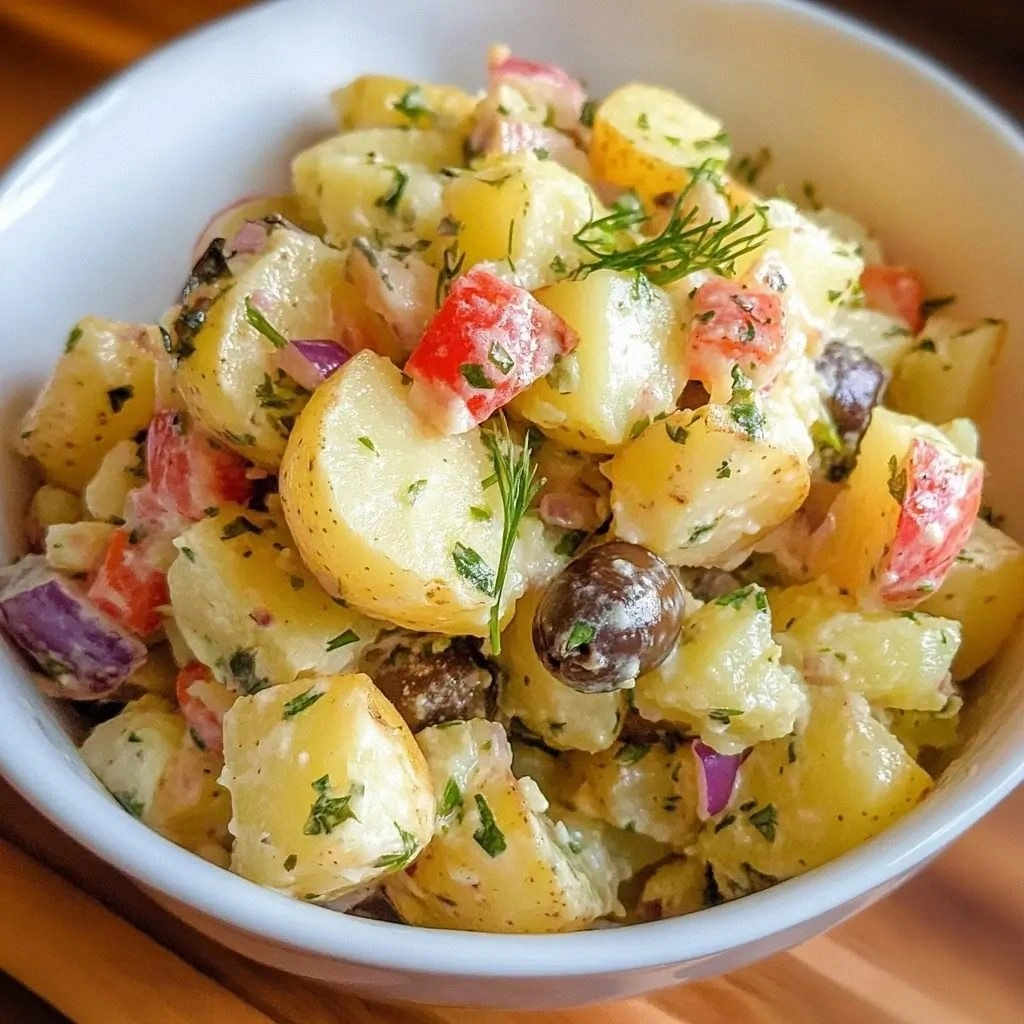
I was in the middle of a kitchen catastrophe last week—my friend dared me to whip up a “quick and impressive” side dish for a dinner party, and I had only a pot, a handful of ingredients, and a vague memory of a potato salad recipe that never quite hit the mark. I stared at the pot of boiling potatoes, the jar of olives, and a jar of Dijon mustard that had been sitting in the fridge for weeks, and thought, “What if I could turn this ordinary combination into something that sings?” The result? A vibrant, herb‑laden, olive‑infused potato salad that tastes like a Mediterranean breeze on a summer afternoon.
Picture the moment your knife slices through a plump, waxy potato, the steam rising like a tiny cloud of anticipation. The air is thick with the earthy scent of freshly boiled potatoes mingling with the briny tang of olives. Your eyes catch the deep, glossy sheen of olive oil as it coats the potatoes, and your mouth waters just at the thought of the lemon‑y tang that will cut through the richness. The texture—soft, tender potatoes with a subtle bite from the olives—creates a satisfying contrast that lingers on the palate.
This isn’t your typical “just boiled potatoes and mayo” salad. I’ve stripped away the heaviness, replaced it with a bright, herbaceous dressing, and added a splash of acidity that makes every bite feel fresh. The olives aren’t just a garnish; they’re a star ingredient that adds depth, brininess, and a slight crunch that keeps the salad from becoming mushy. The result is a dish that feels both indulgent and light, perfect for a summer gathering or a cozy dinner.
What sets this version apart is the unexpected addition of capers and a hint of smoked paprika that give it a subtle kick, and the use of fresh herbs that bring a vibrant color contrast. I dare you to taste this and not go back for seconds. This is hands down the best version you’ll ever make at home. If you’ve ever struggled with bland potato salads, you’re not alone—and I’ve got the fix. Let me walk you through every single step — by the end, you’ll wonder how you ever made it any other way.
What Makes This Version Stand Out
- Bold Flavor: The combination of olives, capers, and a lemon‑y vinaigrette creates a punchy, bright taste that cuts through the earthiness of the potatoes.
- Texture Play: The sliced olives add a satisfying bite and a burst of briny flavor, while the potatoes remain tender yet firm.
- Herbaceous Freshness: Fresh parsley and dill lift the dish, giving it a vibrant green pop that feels almost summer‑fresh.
- Low‑Fat, High‑Protein: With no heavy mayonnaise, this salad stays light while still delivering a good protein punch from the potatoes.
- Make‑Ahead Friendly: The flavors develop over time, making it perfect for a prep‑ahead dinner or a last‑minute side.
- Versatile Crowd‑Pleaser: Whether you’re feeding a crowd at a backyard barbecue or a family dinner, this salad scales effortlessly.
Alright, let's break down exactly what goes into this masterpiece...
Inside the Ingredient List
The Flavor Base
The foundation of this salad starts with the potatoes themselves. I choose russet potatoes because they have a fluffy interior once cooked, yet they hold their shape well during the salad’s resting period. If you’re feeling adventurous, try using a mix of sweet potatoes for a hint of sweetness that balances the olives’ brininess. Skipping the potatoes would turn this into a simple olive relish, losing the comforting heart of the dish.
Choosing the right potatoes is key. Look for firm, unblemished skins and a uniform size so they cook evenly. A small trick: toss the diced potatoes in a little olive oil before boiling; it prevents them from sticking together and gives them a subtle sheen that looks restaurant‑ready.
The Texture Crew
Olives are the texture crew, adding a satisfying bite and a burst of saltiness that elevates every bite. I use Kalamata olives for their deep, fruity flavor, but black olives or green olives can also work if you prefer a milder taste. Slice them thinly to distribute their flavor evenly. If you skip the olives, the salad loses its signature Mediterranean crunch and depth.
Red onion is another texture contributor—its sharpness cuts through the richness of the dressing. Thinly sliced, it offers a gentle crunch without overpowering the other flavors. A quick hack: soak the onion slices in cold water for 10 minutes to mellow their bite if you’re sensitive to raw onion.
The Unexpected Star
Capers are the unexpected star that brings a briny punch and a pop of acidity. They’re tiny, but their flavor is powerful; a few spoonfuls can transform an ordinary salad into something memorable. If capers are unavailable, a splash of vinegar or a pinch of sea salt can mimic the brine effect, though the texture will differ.
Smoked paprika adds a subtle heat and a smoky undertone that complements the olives. It’s a small amount—just a pinch—to avoid overpowering the dish. If you don’t have paprika, a dash of cayenne pepper can provide a similar kick, but be cautious as it’s hotter.
The Final Flourish
Fresh herbs—parsley and dill—are the final flourish that brightens the salad and adds layers of aroma. Parsley offers a peppery freshness, while dill introduces a hint of anise that pairs beautifully with olives. Together they create a green, vibrant finish that feels almost like a garden salad.
The dressing itself is a simple vinaigrette: olive oil, lemon juice, Dijon mustard, minced garlic, salt, and pepper. The acidity from the lemon juice cuts through the richness, while the mustard adds depth and a slight tang. If you’re looking to tweak the flavor, experiment with adding a teaspoon of honey for a touch of sweetness or a splash of white wine vinegar for a different acidity profile.
Everything's prepped? Good. Let's get into the real action...
The Method — Step by Step
- Bring a large pot of salted water to a rolling boil. Drop in the diced potatoes and let them simmer for 8 minutes, or until just tender. This short cooking time preserves their shape and texture. The moment they’re done, drain them and rinse under cold water to halt the cooking process. This step is crucial—overcooked potatoes will turn mushy and ruin the salad’s bite.
- While the potatoes are still warm, transfer them to a large mixing bowl. Pat them dry with a clean towel; excess moisture will dilute the dressing. Toss the potatoes gently with a drizzle of olive oil to keep them from sticking together. This oil also adds a silky finish that coats each piece beautifully.
- In a separate bowl, whisk together the lemon juice, Dijon mustard, minced garlic, salt, pepper, and smoked paprika. Stir until the mustard and oil are fully emulsified. This dressing should be bright and slightly thick—if it’s too thin, add a splash of olive oil. The acidity from the lemon will brighten the potatoes and prevent them from becoming heavy.
- Pour the dressing over the warm potatoes and toss gently until every piece is coated. The warmth will help the dressing cling to the potatoes, creating a cohesive flavor profile. Taste and adjust seasoning if needed—add a pinch more salt or a squeeze of lemon if it feels flat.
- Add the sliced olives, red onion, capers, parsley, and dill to the bowl. Toss again, being careful not to break the potatoes. The herbs should be bright and fragrant, while the olives and onions add a contrasting crunch. The capers’ brine will mingle with the lemon dressing, creating a subtle tang that lingers.
- Cover the bowl with plastic wrap and refrigerate for at least 30 minutes. This resting period allows the flavors to meld and the potatoes to absorb the dressing. If you’re short on time, even 10 minutes will give a noticeable difference, but the longer you let it sit, the more vibrant the flavors become.
- Just before serving, give the salad a gentle stir to redistribute the dressing. Check the seasoning; if it feels a bit flat, a quick squeeze of lemon or a pinch of salt can brighten it up. The salad should have a bright, herbaceous aroma that makes the whole kitchen feel like a Mediterranean market.
- Serve chilled or at room temperature, depending on your preference. Garnish with a few extra dill sprigs or a sprinkle of smoked paprika for a polished look. If you’re plating for a crowd, arrange the salad on a platter and drizzle a little extra olive oil on top for shine.
- Enjoy the first bite—notice how the potatoes are tender but not mushy, the olives deliver a salty punch, and the herbs give a fresh, almost floral note. This is the moment of truth, the instant the salad proves it’s more than a side dish.
- If you have leftovers, store them in an airtight container in the fridge for up to 3 days. For a fresh bite, add a splash of water or lemon juice before serving to rehydrate the potatoes slightly. This dish is a staple for meal prep, so keep it handy for busy weeknights.
That's it — you did it. But hold on, I've got a few more tricks that'll take this to another level...
Insider Tricks for Flawless Results
The Temperature Rule Nobody Follows
Many people think that letting potatoes cool completely before adding the dressing is the key to a perfect salad. In reality, dressing the potatoes while they're still warm allows the flavors to penetrate more deeply. The heat creates tiny pores in the potato skin that let the vinaigrette soak in, resulting in a more cohesive and flavorful bite.
Why Your Nose Knows Best
When you’re tasting the dressing, trust your nose over your palate. The aroma of fresh herbs, the sharpness of lemon, and the briny punch of olives will guide you to the perfect balance. I once added too much salt and realized the dish was too flat until I smelled the missing freshness of a bright herb. A quick sniff can save the day.
The 5‑Minute Rest That Changes Everything
Even if you’re in a rush, let the salad sit for at least five minutes after tossing. This short rest allows the flavors to mingle and the potatoes to absorb the dressing. I’ve found that a quick 5‑minute pause makes the salad taste like it had rested for hours.
Skip the Extra Oil, Keep the Crunch
If you’re watching calories, you can reduce the olive oil by a tablespoon. The key is to drizzle it just enough to coat the potatoes lightly; this preserves the crunch of the olives and the bite of the onions. The result is still a delicious salad, but with a slightly lighter feel.
Add a Splash of Vinegar for Extra Brightness
A teaspoon of white wine vinegar or apple cider vinegar can brighten the dressing further, especially if you’re using sweeter potatoes. The acidity cuts through the richness of the olives and brings a crisp finish to every bite. Try it the next time you’re craving a zesty kick.
Creative Twists and Variations
This recipe is a playground. Here are some of my favorite ways to switch things up:
Mediterranean Twist
Swap the parsley for chopped fresh basil and add a handful of sun‑dried tomatoes. The basil’s sweet aroma and the tomatoes’ chewy texture will give the salad a distinctly Mediterranean feel. This version pairs wonderfully with grilled halloumi or a simple feta crumble.
Spicy Kick
Introduce a pinch of red pepper flakes or a dash of hot sauce into the dressing. The heat will contrast beautifully with the mild potatoes and the briny olives. This variation is perfect for a summer barbecue where guests love a little spice.
Herbal Fusion
Add a tablespoon of chopped fresh mint and a dash of cumin to the dressing. The mint offers a cool, aromatic note while cumin adds earthiness. This fusion style works well with a side of grilled vegetables or a quinoa pilaf.
Roasted Garlic Version
Replace the minced garlic with roasted garlic cloves. The roasted garlic brings a sweet, mellow flavor that pairs nicely with the olives. Toss the roasted garlic into the dressing for a deeper, richer taste.
Vegan Upgrade
Use a plant‑based mayo or a homemade cashew cream in place of the vinaigrette. The creamy texture will give the salad a luxurious feel while keeping it dairy‑free. Add a splash of nutritional yeast for a subtle umami boost.
Storing and Bringing It Back to Life
Fridge Storage
Store the salad in an airtight container in the refrigerator for up to 3 days. The flavors will deepen over time, making it even more delicious. Keep the container sealed to prevent the potatoes from drying out and the salad from absorbing other odors.
Freezer Friendly
While potatoes don’t freeze well, you can store the dressing and ingredients separately. Freeze the vinaigrette in an ice cube tray; once frozen, transfer the cubes to a freezer bag. When ready to serve, thaw the dressing and toss it with freshly boiled potatoes and olives.
Best Reheating Method
If you need to reheat leftovers, place the salad in a shallow pan, add a splash of water, and gently warm over low heat. This steams the potatoes back to a fresh, slightly moist state without making them soggy. Avoid microwaving, which can make the potatoes rubbery.
Now that you’ve mastered the classic, it’s time to experiment. Grab your favorite ingredients, throw in a few of the twists, and watch the magic unfold. The best part? You’ll have a dish that’s both comforting and adventurous, ready to wow anyone at the table.