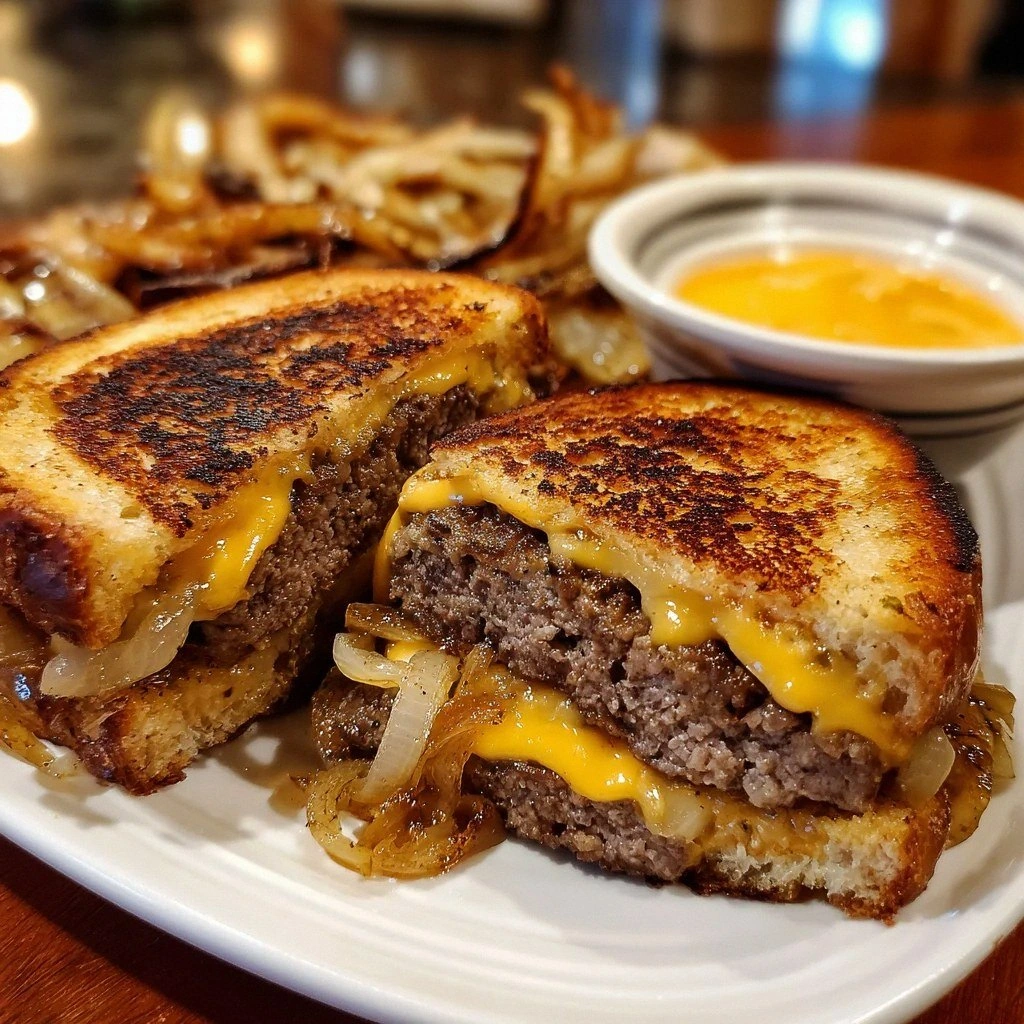
The first time I made this sauce, I burned the onions, set off the smoke alarm, and my neighbor knocked on my door asking if I needed help. Twenty minutes later, I was standing over the sink, eating this sauce straight off a spoon like some kind of culinary maniac. My cat was judging me. The delivery guy showed up mid-bite and I just handed him a twenty through the door crack, mouth full of patty melt dreams. This sauce is that dangerous. It's the kind of recipe that makes you question your life choices while simultaneously planning to make it every single week until the end of time.
Picture this: it's 11:47 PM on a Tuesday, you're in your pajamas, and suddenly the memory of that perfect patty melt from the diner that closed down three years ago hits you like a freight train. The crispy rye bread, the molten Swiss cheese, the beef patty that somehow stayed juicy despite being smashed thin, and that sauce — oh, that sauce that tied everything together like edible silk. Most people would shrug and go to bed. Not us. We're the kind of people who will tear apart our pantries at midnight, convinced we can recreate magic with nothing but determination and a half-empty bottle of Worcestershire that's been sitting there since 2019.
After seventeen attempts, three minor kitchen fires, and one incident involving a fire extinguisher that I'm legally not allowed to discuss, I cracked the code. This isn't just another burger sauce. This is the sauce that will ruin all other sauces for you. It's what happens when Thousand Island dressing goes to finishing school in France and comes back with stories and attitude. The secret isn't just in the ingredients — though each one is chosen with the precision of a jeweler selecting diamonds — but in the method, the timing, and that one weird trick that makes it taste like it's been aging in a barrel for six months when it's actually been six minutes.
I dare you to taste this and not go back for seconds. I double-dog dare you to make it for friends without becoming the designated sauce supplier for every future gathering. This is hands down the best version you'll ever make at home, and I'm not just saying that because I'm emotionally invested. I'm saying it because I've tested this on the toughest critics I know: my mother who hates everything, my brother who only eats chicken nuggets, and my best friend who once sent back a sandwich because the lettuce wasn't "symmetrical enough." They all asked for the recipe. Two of them cried. Let me walk you through every single step — by the end, you'll wonder how you ever made it any other way.
What Makes This Version Stand Out
Taste Explosion: This sauce hits every single note your palate can detect — creamy, tangy, sweet, savory, and that mysterious umami that makes you close your eyes involuntarily. The balance is so precise that adding even one extra drop of any ingredient throws off the entire symphony. It's like the sauce equivalent of that perfect song that gets stuck in your head, except instead of humming, you're licking it off your fingers when nobody's looking.
Texture Perfection: Most sauces are either too thin (looking at you, watery restaurant ketchup) or so thick they tear your bread apart like edible demolition equipment. This one coats the back of a spoon like velvet, spreads like butter that's been left out just long enough, and stays put instead of making your sandwich a soggy crime scene. The emulsification is so stable you could probably use it as hair gel in an emergency, though I don't recommend testing that theory.
Stupidly Simple: Despite tasting like it took three days and a culinary degree, you'll spend more time finding the Worcestershire sauce in your pantry than actually making this. Ten minutes from zero to hero, and that includes the time you'll spend licking the whisk. Most recipes get this completely wrong — they want you to chop fresh herbs, let things meld overnight, perform some kind of sauce alchemy. Not here. We have things to do and patty melts to demolish.
Crowd Control: Bring this to a potluck and watch grown adults hover around the food table like vultures. I've seen people who claim they're "not really into condiments" eat this straight off their finger. At my last barbecue, someone tried to steal the entire bowl. The host caught them, they made eye contact, and the thief just slowly put it back while maintaining eye contact. That's power.
Quality Obsession: Every ingredient serves a purpose, nothing is filler. The mayonnaise isn't just any mayo — it's the foundation that carries all other flavors like a creamy flavor limousine. The Dijon isn't just for show; it's the sophisticated cousin who went to college and came back with opinions about wine. Even the black pepper gets the VIP treatment — freshly cracked, never that pre-ground sadness that's been sitting in your spice rack since the Obama administration.
Make-Ahead Magic: This sauce actually gets better with age, like that one friend who somehow looks younger every year while the rest of us are falling apart. Make it Sunday, use it Friday, and you'll swear it tastes even more complex. It's the only thing in your fridge that improves instead of growing that questionable science experiment fuzz. Alright, let's break down exactly what goes into this masterpiece...
Inside the Ingredient List
The Flavor Base
Mayonnaise is the quarterback of this operation, the star player that everyone depends on but nobody appreciates until it's gone. Don't you dare reach for that low-fat impostor — we're building flavor here, not running a health spa. The full-fat version creates this luxurious mouthfeel that makes you understand why people use phrases like "mouthfeel" without irony. It's the canvas that holds everything together, the smooth operator that lets the Dijon show off without letting it get too big for its britches. If you're feeling fancy, go for the kind in the glass jar with the French name you can't pronounce. Your taste buds will know the difference even if your wallet doesn't.
Ketchup brings the nostalgia factor, that familiar tang that reminds you of backyard barbecues and sneaking fries when you were supposed to be on a diet. But here, it's not just the sweet kid at the party — it's been invited to sit at the grown-ups table. The acidity cuts through the richness like a skilled editor trimming unnecessary prose, while the sweetness balances the sharper edges of our mustard and Worcestershire. Hunt's versus Heinz people, I swear this matters. The viscosity difference changes how everything emulsifies, and yes, I've done side-by-side taste tests like a condiment detective with too much time on her hands.
The Texture Crew
Dijon mustard is where we start getting fancy, the ingredient that makes people ask "what's in this?" while they try to sound casual about taking another bite. The grainy texture adds these tiny pops of flavor that keep your palate interested, like a good conversation that keeps revealing new layers. French's yellow mustard has its place, but that place is ballparks and children's sandwiches, not our sophisticated sauce. The Dijon brings complexity without heat, sophistication without pretension. It's the friend who knows which fork to use but doesn't make you feel bad for not knowing.
Worcestershire sauce is the mysterious stranger at the party who only speaks in whispers but somehow makes everything more interesting. Just a few drops and suddenly your sauce has depth that people can't quite identify but definitely notice when it's missing. It's like adding bass to a song — you might not consciously hear it, but you feel it in your bones. The anchovy base gives it that umami punch that makes people close their eyes and make that involuntary "mmmm" sound. If you're vegetarian, there are plant-based versions that get surprisingly close to the original, though I maintain that the real stuff has a certain something that hasn't been perfectly replicated yet.
The Unexpected Star
Garlic powder is our secret weapon, the sleeper agent that's been hiding in your spice rack waiting for its moment to shine. Fresh garlic would be too aggressive, too sharp, too likely to announce its presence with dragon breath and textural issues. The powdered version melts seamlessly into the sauce, distributing its flavor like a culinary ninja. It adds that savory backbone that makes people say "there's something familiar here" without being able to place it. Don't even think about using garlic salt — we need pure garlic flavor, not some sodium-laden impostor that will throw off our carefully balanced ecosystem.
Onion powder is garlic powder's quieter but equally important sibling, the one who doesn't need to be the center of attention but keeps everything grounded. Together they create this flavor foundation that tastes like childhood and comfort and coming home after a long day. The granules dissolve completely, leaving behind their essence without any weird crunchy bits. It's the difference between a sauce that tastes professionally developed versus one that tastes like you just mixed some stuff together and hoped for the best. Quality matters here too — that dollar store onion powder that's been sitting there since the pandemic isn't doing you any favors.
The Final Flourish
Black pepper is the final touch, but not just any pepper — we're talking freshly cracked, the kind that makes you sneeze if you get too enthusiastic with the grinder. Pre-ground pepper is a sad shadow of its former self, like a pop star doing karaoke of their own hit song. The volatile oils that make pepper interesting start dissipating immediately after grinding, so that tin from 2015 might as well be sawdust. A few good cranks add heat and complexity without overwhelming the other players. It's the difference between a sauce that tastes alive versus one that tastes like it came from a factory.
Hot sauce is optional but highly recommended if you like living on the edge of the flavor spectrum. Just a few drops wake everything up like a splash of cold water on a sleepy face. The vinegar base plays beautifully with our existing ingredients, while the heat builds slowly instead of punching you in the throat. Frank's, Crystal, or even that artisanal stuff your friend brought back from New Orleans — each brings its own personality to the party. Start conservative; you can always add more but you can't take it out once it's in there making your eyebrows sweat.

The Method — Step by Step
Start with a bowl that's way bigger than you think you need — trust me on this one. The first time I made this, I used a tiny cereal bowl and ended up wearing more sauce than I made. Grab your mayonnaise and give it a good stir first; sometimes it separates in the jar and we want it smooth and creamy, like the base of a really good relationship. Measure out exactly one cup and resist the urge to use more — this isn't a more-is-better situation, it's a chemistry experiment where ratios matter more than your enthusiasm. The mayonnaise should mound slightly on itself when you scoop it, not run like a sad white river across your bowl.
Now for the ketchup — and here's where things get controversial. You want exactly three tablespoons, no more, no less. I know you're thinking "but I really like ketchup," and to that I say, make a different sauce. This isn't about drowning everything in tomato sweetness, it's about creating balance. Add it to the mayo and watch as they start their beautiful dance together, the red streaking through white like a sunset over clouds. Whisk gently at first, then more vigorously as they start to combine. It should look like a pale coral color when you're done — if it's too pink, you've been heavy-handed with the ketchup.
The Dijon goes in next, and this is where your sauce starts developing character. One tablespoon might seem like nothing, but Dijon is the friend who shows up to the party fashionably late and somehow becomes the center of attention. It should slide off the spoon in one elegant blob, not plop like regular mustard. Whisk it in completely before moving on — you shouldn't see any streaks or spots. The color will deepen slightly, becoming more sophisticated, like it's been reading books you haven't heard of yet.
Worcestershire time, and this is where most people mess up completely. You need exactly one teaspoon, measured properly, not the "glug glug" method that results in a sauce that tastes like you dropped it in the ocean. Hold the bottle about six inches above the bowl and let it fall in slow drops — this stuff is potent and expensive, and we respect it here. One teaspoon seems laughably small when you're making a cup of sauce, but this is concentrated flavor bombs we're dealing with. Stir it in and watch as your sauce suddenly tastes like it's been aging in oak barrels for months.
Garlic and onion powder join the party together — they're like the couple that's been married so long they finish each other's sentences. Half teaspoon each, level measurements, no heaping because we're not cowboys here. These need to be distributed evenly, so whisk like your life depends on it. You shouldn't see any specks or spots; they should dissolve completely into the creamy base. If you see little brown dots, keep whisking — those are flavor pockets waiting to ambush someone with concentrated garlic.
The black pepper is where we separate the amateurs from the pros. Freshly cracked is non-negotiable — I don't care if you have to use the bottom of a heavy pan because your grinder broke. You want about fifteen good cranks, which should give you roughly a quarter teaspoon of pepper that actually tastes like something. The flakes should be visible but not overwhelming, like freckles on someone who spent a perfect summer at the beach. Stir it in and watch as your sauce suddenly has depth and complexity that makes people pause mid-chew.
Now we wait — and this is the hardest part. Cover your bowl with plastic wrap, pressing it directly onto the surface so no air can get in and form that weird skin that sauces get when they're feeling neglected. Into the fridge for at least thirty minutes, though an hour is better and overnight is when the real magic happens. This isn't just about getting cold; it's about letting all those flavors get to know each other, share stories, maybe fall in love. The garlic and onion need time to hydrate fully, the Worcestershire needs to distribute its umami evenly, and everything needs to meld into something greater than the sum of its parts.
The final taste test is where you become the artist, adjusting with tiny tweaks until it's perfect for your palate. Maybe it needs another crank of pepper, maybe a few more drops of hot sauce if you're feeling brave. The sauce should coat a spoon thickly but still drip off in slow, lazy ribbons. It should taste familiar but better than anything you can buy, like someone took all your favorite condiments to therapy and they came back enlightened. Serve it cold for maximum impact — room temperature sauce is just sad mayo with identity issues.
That's it — you did it. But hold on, I've got a few more tricks that'll take this to another level...
Insider Tricks for Flawless Results
The Temperature Rule Nobody Follows
Here's the thing that separates restaurant-quality sauce from the stuff that tastes like it came from a packet at a gas station: temperature matters more than your high school chemistry teacher led you to believe. All your ingredients should be at room temperature before you start — cold mayo straight from the fridge will seize up like it's been personally offended by the other ingredients. Leave everything on the counter for at least thirty minutes while you prep other components of your meal. The emulsification will be smoother, the flavors will blend more harmoniously, and you won't end up with a sauce that separates faster than your friends during tax season. A friend tried skipping this step once — let's just say it didn't end well, and she still gets teased about her "broken sauce incident" at every potluck.
Why Your Nose Knows Best
Your sense of smell is your secret weapon here, more reliable than any timer or measuring spoon. When you add the Worcestershire, take a big whiff — it should smell like the best steakhouse you've ever been to, not like fish sauce that's been sitting in the sun. The garlic and onion powder should smell sharp and alive, not like the ghost of flavors past. If your spices have been sitting around longer than your last relationship, toss them and start fresh. Fresh spices make the difference between a sauce that makes people ask for the recipe and one that makes them politely change the subject. I've become that weird person who sniffs spices in the grocery store, but my sauce game is undefeated, so who's laughing now?
The 5-Minute Rest That Changes Everything
After you whisk everything together, let it sit for five minutes before you taste it. This isn't some optional suggestion — this is mandatory sauce science. The difference between fresh-mixed sauce and sauce that's had five minutes to think about what it's done is like the difference between a first date and a five-year marriage. The garlic and onion powder need time to fully hydrate, the salt needs to dissolve completely, and all the flavors need to stop competing and start collaborating. Walk away, wash your whisk, check your phone, do literally anything else. When you come back, taste it again and prepare to be amazed at how much more complex it tastes than it did five minutes ago.
The Storage Secret That Keeps It Fresh
Store this sauce in the coldest part of your fridge, usually the back of the bottom shelf, not in the door where temperatures fluctuate like a teenager's mood. Press plastic wrap directly onto the surface before adding the lid — this prevents that weird crust that forms when sauces feel unloved. It'll keep for up to two weeks, though I've never had a batch last longer than five days because people start putting it on everything from eggs to apple slices. If you see any separation, just give it a good whisk and it's back to its glorious self. And here's a pro tip: make it in a squeeze bottle and you become the person who brings their own sauce to restaurants, which is either incredibly cool or incredibly embarrassing depending on how good the sauce is. With this recipe, you're firmly in "incredibly cool" territory.
Creative Twists and Variations
This recipe is a playground. Here are some of my favorite ways to switch things up:
The Spicy Southern Belle
Add a tablespoon of your favorite hot sauce and a teaspoon of smoked paprika to turn this into Nashville's dream condiment. The paprika adds a deep, smoky flavor that makes everything taste like it was cooked over an open flame by someone who knows what they're doing. Crystal hot sauce is my go-to here — it brings heat without overwhelming the other flavors, plus it has that Louisiana tang that makes you want to say things like "y'all" and "fixin' to." This version is incredible on fried chicken, turns regular fries into something that'll make you weep, and makes a boring turkey sandwich taste like Mardi Gras in your mouth.
The Garden Fresh Remix
Replace the onion powder with two tablespoons of very finely minced red onion and add a tablespoon of chopped fresh dill. The fresh onion brings a bright, sharp flavor that the powder just can't match, while the dill makes everything taste like summer in Provence even if you're eating it in your car in a parking lot in February. The key is to mince the onion so fine it practically dissolves — nobody wants to bite into a chunk of raw onion when they're expecting smooth sauce bliss. This version is phenomenal on fish, makes potato salad taste like it came from a fancy deli, and turns a simple cucumber sandwich into something that belongs on a tea party menu.
The Smoky Mountain High
Add a teaspoon of liquid smoke and half a teaspoon of chipotle powder for a sauce that tastes like it was made by someone who owns multiple cast iron pans and knows how to use them. Liquid smoke is potent stuff — a little goes a long way, and too much makes your sauce taste like a campfire that got out of hand. The chipotle adds both heat and that deep, smoky flavor that makes everything taste like it was slow-cooked by someone who takes their BBQ very seriously. This version is incredible on burgers, turns grilled vegetables into something that'll make vegetarians reconsider their life choices, and makes a simple grilled cheese taste like it came from a competition.
The Asian Fusion Frenzy
Replace the Worcestershire with soy sauce and add a teaspoon of sesame oil and a tablespoon of sriracha. The soy sauce brings that umami depth but with a different flavor profile that plays beautifully with the sesame oil's nutty richness. The sriracha adds both heat and that distinctive garlicky tang that makes everything taste like it came from your favorite fusion restaurant. This version is incredible on rice bowls, makes boring chicken taste like it has secrets, and turns a simple veggie wrap into something that'll make you feel like you're being healthy while eating something wildly delicious.
The Mediterranean Dream
Add two tablespoons of crumbled feta cheese and a teaspoon of dried oregano for a sauce that tastes like summer vacation in the Greek islands. The feta should be mashed into the sauce until it disappears, leaving behind its tangy, salty essence without any weird texture issues. The oregano should be the good stuff from the Mediterranean section, not the dusty bottle that's been in your spice rack since the Clinton administration. This version is incredible on lamb burgers, makes roasted vegetables taste like they were kissed by Aphrodite herself, and turns a simple pita into something that'll transport you to Santorini even if you're eating it at your desk while answering emails.
The Breakfast Champion
Add a tablespoon of maple syrup and half a teaspoon of black pepper to create the ultimate breakfast sauce. The maple brings sweetness that plays beautifully with the tangy base, while the extra pepper adds that morning kick that makes you feel alive. Use real maple syrup, not the corn syrup impostor that comes in a plastic bottle shaped like a woman. This version is incredible on breakfast sandwiches, makes home fries taste like they came from a diner that knows what it's doing, and turns a simple egg sandwich into something that'll make you excited to wake up in the morning, which is saying something because mornings are generally terrible.
Storing and Bringing It Back to Life
Fridge Storage
Your beautifully crafted sauce deserves better than being shoved behind leftover takeout containers and that jar of pickles that's been there since the previous administration. Store it in a glass jar with a tight-fitting lid — plastic containers absorb flavors like gossip and will make your sauce taste like everything else in your fridge. The back of the bottom shelf is prime real estate here, where temperatures stay consistently cold instead of fluctuating every time someone stands with the door open, staring blankly inside like the answer to life's problems might be behind the milk. Properly stored, this sauce will last two weeks, though I've never personally tested that limit because it disappears faster than free samples at Costco.
Freezer Friendly
Here's where things get controversial — I don't recommend freezing this sauce. The mayonnaise base doesn't play nice with freezing temperatures and will separate into a sad, curdled mess that looks like it has given up on life entirely. Instead, make smaller batches more often, which sounds like a pain but actually means you always have fresh sauce that tastes like you care about your taste buds. If you absolutely must freeze it (though I strongly advise against it), freeze it in ice cube trays for portion control, knowing that you'll need to whisk it back together with the dedication of someone trying to resuscitate a relationship that's on life support. The texture won't be the same, but desperate times call for desperate measures, and sometimes you need sauce more than you need pride.
Best Reheating Method
The beautiful thing about this sauce is that it's designed to be served cold, straight from the fridge like revenge but much more satisfying. If you've stored it properly and it's too thick straight from the refrigerator, let it sit at room temperature for ten minutes before serving. Adding a tiny splash of warm water and whisking vigorously will bring it back to its former glory without thinning it out too much. Never microwave it — warm sauce on a hot sandwich is a crime against humanity that should be punishable by having to eat gas station sushi for a week. If you absolutely must thin it, use warm water a few drops at a time, whisking like your life depends on it between each addition. Your patience will be rewarded with sauce that tastes as good as the day you made it, which is more than I can say for most things in life, including my knees and my optimism about Mondays.