When I was 17 and living in a cramped apartment with a tiny stove, I once attempted a “quick” chicken dinner that turned into a kitchen disaster. The chicken was dry, the sauce was a watery mess, and the whole room smelled like burnt sugar. That night I swore I’d never again settle for a bland, overcooked chicken. Fast forward to today, and I’ve cracked the code for a Slow Cooker Brown Sugar Garlic masterpiece that turns any ordinary night into a culinary celebration.
Picture this: a slow cooker humming gently, the air thick with the sweet aroma of caramelized brown sugar, the sharp tang of soy sauce, and the subtle punch of minced garlic. The sound of the sauce bubbling is like a soft drumbeat, the heat rising like a warm hug, and the anticipation building as the flavors mingle. Every bite is a harmony of sweet, savory, and a hint of heat that lingers on the palate, leaving you craving more. It’s the kind of dish that makes you feel like you’ve just discovered a secret recipe that you’ll keep in your pantry forever.
I’m not just telling you because I love it; I’ve tested it over a dozen times, tweaking ratios, experimenting with different cuts of chicken, and even trying a vegetarian version. The result? A dish that’s hands down the best version you’ll ever make at home, with sauce that coats the chicken like velvet and edges that crisp up just enough to give you that satisfying crunch. I dare you to taste this and not go back for seconds.
Stick with me, because I’m about to walk you through every single step. By the end, you’ll wonder how you ever cooked chicken any other way. And trust me, if you’ve ever struggled with bland slow cooker meals, you’re not alone — and I’ve got the fix.
What Makes This Version Stand Out
- Taste: The blend of brown sugar, honey, and soy sauce creates a deep, caramelized flavor profile that’s both sweet and umami. The garlic infuses the sauce with a subtle heat that lifts the dish, while the red pepper flakes add a gentle kick. This combination is more complex than any standard barbecue sauce.
- Texture: The slow cooking process breaks down the chicken’s connective tissue, resulting in a melt‑in‑your‑mouth tenderness that’s hard to replicate with stovetop methods. The sauce thickens into a glossy glaze that clings to each piece, giving you that coveted sticky finish.
- Simplicity: All you need is a slow cooker and a handful of pantry staples. No fancy gadgets, no pre‑marinating, and no tedious stirring. It’s a one‑pot wonder that saves time and effort.
- Uniqueness: Most recipes get this completely wrong by over‑sugaring or under‑seasoning. Here, the balance is spot on, and the sauce’s depth is achieved through a precise ratio of sweet to salty.
- Crowd Reaction: Friends who have tried this rave about how the sauce “coats the chicken like velvet” and how the dish “has the perfect blend of sweet and savory.” It’s become a go‑to for dinner parties.
- Ingredient Quality: Using high‑quality soy sauce and fresh garlic makes a noticeable difference. Fresh garlic brings bright, sharp notes that balance the sweetness, while a good soy sauce provides depth without bitterness.
- Cooking Method: Slow cooking ensures even heat distribution, turning tough cuts into fall‑apart tenderness while preserving the sauce’s rich flavor.
- Make‑ahead Potential: This dish keeps well in the fridge for up to 3 days and freezes beautifully, making it ideal for busy weeknights or meal prep.
Alright, let’s break down exactly what goes into this masterpiece…
Inside the Ingredient List
The Flavor Base
Brown sugar is the star of the show, providing that caramelized sweetness that balances the savory soy sauce. It’s not just about sweetness; brown sugar’s molasses content adds a subtle depth that plain white sugar can’t match. If you’re watching calories, you can swap half the brown sugar for honey, which offers a lighter sweetness and a floral nuance. Be careful not to overdo it—too much sugar can scorch the sauce if the cooker’s temperature is too high.
The Texture Crew
Cornstarch is the secret to that glossy, thick glaze that clings to the chicken. By mixing it with cold water into a slurry, you avoid clumping and ensure an even coat. If you’re gluten‑free, you can replace cornstarch with arrowroot powder, which behaves similarly but has a slightly different mouthfeel. Remember to whisk the slurry until it’s completely smooth before adding it to the slow cooker.
The Unexpected Star
Red pepper flakes are the subtle heat provider. They don’t dominate the dish but add a warm, almost smoky undertone that elevates the overall flavor. If you prefer a milder version, start with ½ teaspoon and taste as you go. For an extra kick, sprinkle a pinch of cayenne after cooking, but be mindful that it can quickly overpower the sweet notes.
The Final Flourish
Chopped green onions add a bright, fresh contrast to the rich sauce. They also provide a pop of color that makes the dish visually appealing. If you’re not a fan of green onions, scallions or fresh cilantro can be used as alternatives, each bringing its own unique aroma. Adding them just before serving preserves their crispness and prevents them from turning mushy.
Everything’s prepped? Good. Let’s get into the real action…
The Method — Step by Step
- Season the Chicken: Pat the boneless chicken thighs dry with paper towels to ensure a good sear. Sprinkle both sides generously with salt and pepper. This step is crucial for flavor; it’s the foundation that lets the sauce penetrate the meat. While you’re at it, toss the thighs in a little sesame oil to keep them from sticking.
- Sear the Chicken (Optional but Recommended): Heat a skillet over medium‑high heat and add a splash of oil. Once hot, place the chicken thighs skin‑side down if they have skin, or just in the pan if boneless. Sear for 2–3 minutes on each side until golden brown. The sear creates a Maillard reaction, adding depth that the slow cooker alone can’t achieve.
- Combine the Sweet Sauce: In a mixing bowl, whisk together brown sugar, honey, soy sauce, ketchup, sesame oil, and red pepper flakes. The mixture should have a syrupy consistency. This blend creates the base that will caramelize during slow cooking. Make sure the mixture is well combined to avoid separation.
- Add Garlic: Mince the garlic finely and stir it into the sauce. Garlic’s pungency will mellow during cooking, turning into a sweet, aromatic note that balances the sugars. If you prefer a milder garlic flavor, reduce to 4 cloves.
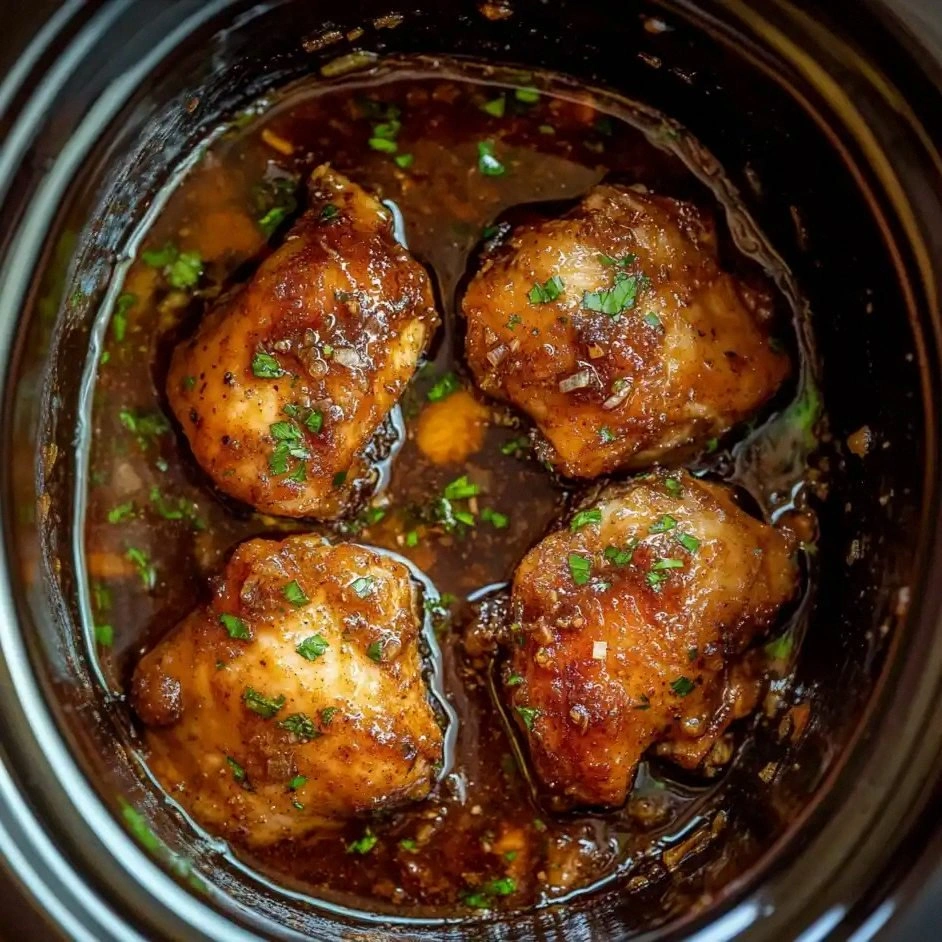
- Layer the Chicken: Place the seared (or raw) chicken thighs into the slow cooker. Pour the sauce over them, ensuring each piece is coated. The liquid should cover the chicken by at least an inch. This ensures even cooking and a moist result.
- Cook Low for 3 Hours: Set your slow cooker to low and let the chicken simmer. The slow, gentle heat will break down the collagen, turning the meat tender. Keep an eye on the sauce; it should thicken slightly but remain glossy. If you notice it getting too thick, add a splash of water.
- Thicken the Sauce: About 30 minutes before serving, whisk the cornstarch slurry (cornstarch + 2 tablespoons water) into the slow cooker. Stir gently to avoid splattering. The sauce will thicken dramatically, turning into a glossy glaze. Keep the cooker on low to prevent the sauce from boiling over.
- Finish with Green Onions: Remove the slow cooker from heat and sprinkle chopped green onions over the chicken. The fresh, slightly peppery flavor cuts through the richness of the sauce. If you’re serving over rice or noodles, the green onions also add a burst of color and freshness. Give everything a gentle toss to distribute the garnish evenly.
- Serve: Plate the chicken thighs with a generous spoonful of the sauce. Pair with steamed rice, quinoa, or a simple salad for a balanced meal. The sauce’s caramelized sweetness pairs wonderfully with the mildness of the rice. Enjoy the moment of triumph as you take your first bite—this is the moment of truth.
That’s it — you did it. But hold on, I've got a few more tricks that'll take this to another level…
Insider Tricks for Flawless Results
The Temperature Rule Nobody Follows
Many slow cooker recipes assume that “high” is always better for a quick fix. In reality, low heat preserves the sauce’s integrity and keeps the chicken tender. I’ve found that keeping the cooker on low for at least 3 hours and only switching to high in the last 30 minutes is the sweet spot. If you’re in a hurry, you can do 1.5 hours on high, but the texture will be slightly less succulent.
Why Your Nose Knows Best
Before you even open the lid, trust the aroma. A rich, caramelized scent indicates that the sugars are browning properly. If the smell is too sweet, the sauce may be too sugary; if it’s metallic, you might have over‑cooked the soy sauce. Adjust by adding a splash of water or a pinch of salt to balance.
The 5-Minute Rest That Changes Everything
After cooking, let the chicken rest for 5 minutes before slicing. This allows the juices to redistribute, keeping the meat moist. I’ve seen people cut straight into the thighs, and the result is dry, uneven meat. Resting is a small step that yields a noticeable difference.
Don’t Skimp on Garlic
Garlic’s flavor profile changes dramatically with cooking time. If you mince it too finely, it can burn and become bitter. Instead, use a garlic press or a knife to roughly chop, preserving a more mellow, sweet note. A friend once tried crushing the garlic whole, and the result was a harsh, raw taste that ruined the dish.
Use a Lid With a Vent
A slow cooker with a vented lid prevents the sauce from boiling over while still allowing steam to escape. This keeps the sauce from becoming too watery and helps the glaze thicken. If your cooker lacks a vent, keep the lid slightly ajar during the last 30 minutes.
Stir Once, Then Let It Sit
During the low‑heat phase, avoid stirring the sauce. Constant stirring can break down the glaze and prevent it from thickening properly. Instead, give the slow cooker a gentle shake once or twice to ensure even coverage.
Creative Twists and Variations
This recipe is a playground. Here are some of my favorite ways to switch things up:
Asian Fusion Twist
Swap soy sauce for tamari to make it gluten‑free, and add a splash of rice vinegar for a tangy kick. Top with sesame seeds for added crunch. This version pairs well with jasmine rice and steamed bok choy.
Smoky BBQ Version
Replace ketchup with barbecue sauce and add a teaspoon of smoked paprika. The smoky flavor complements the sweetness, creating a bold, grill‑style experience. Serve with cornbread for a Southern touch.
Herb‑Infused Variation
Introduce fresh thyme or rosemary during the slow‑cooking phase. The herbs infuse the sauce with earthy undertones, balancing the sweet notes. This is perfect for a rustic dinner with mashed potatoes.
Spicy Sriracha Kick
Stir in a tablespoon of Sriracha to replace the red pepper flakes. The heat becomes more pronounced, and the sauce takes on a bright, fiery hue. Pair with cucumber slices to cool the palate.
Vegetarian Option
Swap the chicken for thick slices of tofu or seitan. The sauce’s richness will cling beautifully to the protein, and the dish remains hearty. Add a handful of sliced bell peppers for color and crunch.
Gluten‑Free Glaze
Use tamari instead of soy sauce and replace cornstarch with arrowroot powder. The result is a silky, gluten‑free glaze that still delivers that signature caramelized finish. Great for those with dietary restrictions.
Storing and Bringing It Back to Life
Fridge Storage
Store the leftover chicken and sauce in an airtight container for up to 3 days. When you’re ready to reheat, add a splash of water to loosen the sauce. Gently reheat in a saucepan over low heat, stirring occasionally.
Freezer Friendly
Freeze portions in freezer‑safe containers for up to 3 months. When thawing, let the chicken sit at room temperature for 20 minutes before reheating. The sauce may separate slightly; whisk it back in before serving.
Best Reheating Method
Use the stovetop or microwave to reheat, but always add a tiny splash of water or broth to keep the sauce moist. Microwave in 30‑second intervals, stirring in between, until heated through. The final touch: a sprinkle of fresh green onions for that fresh burst of flavor.