I still remember the sweltering August afternoon when my air-conditioning gave up and my appetite went on strike. There I stood, fridge door wide open, sweat trickling down my back, staring at a can of chickpeas and half a block of feta like they were the lead actors in a very low-budget cooking show. I was supposed to bring a dish to a backyard potluck in three hours, and the thought of turning on the stove felt like volunteering for a sauna in hell. In desperation, I started chopping, squeezing, and tasting, figuring that if the end result was tragic I could always stop for store-bought hummus on the way. Ten minutes later I shoved a forkful of the impromptu salad in my mouth and—boom—my taste buds staged a full Broadway revue right there in my kitchen. I ended up eating half the bowl while leaning against the counter, mentally canceling the hummus backup plan because, honestly, this accidental masterpiece deserved center stage.
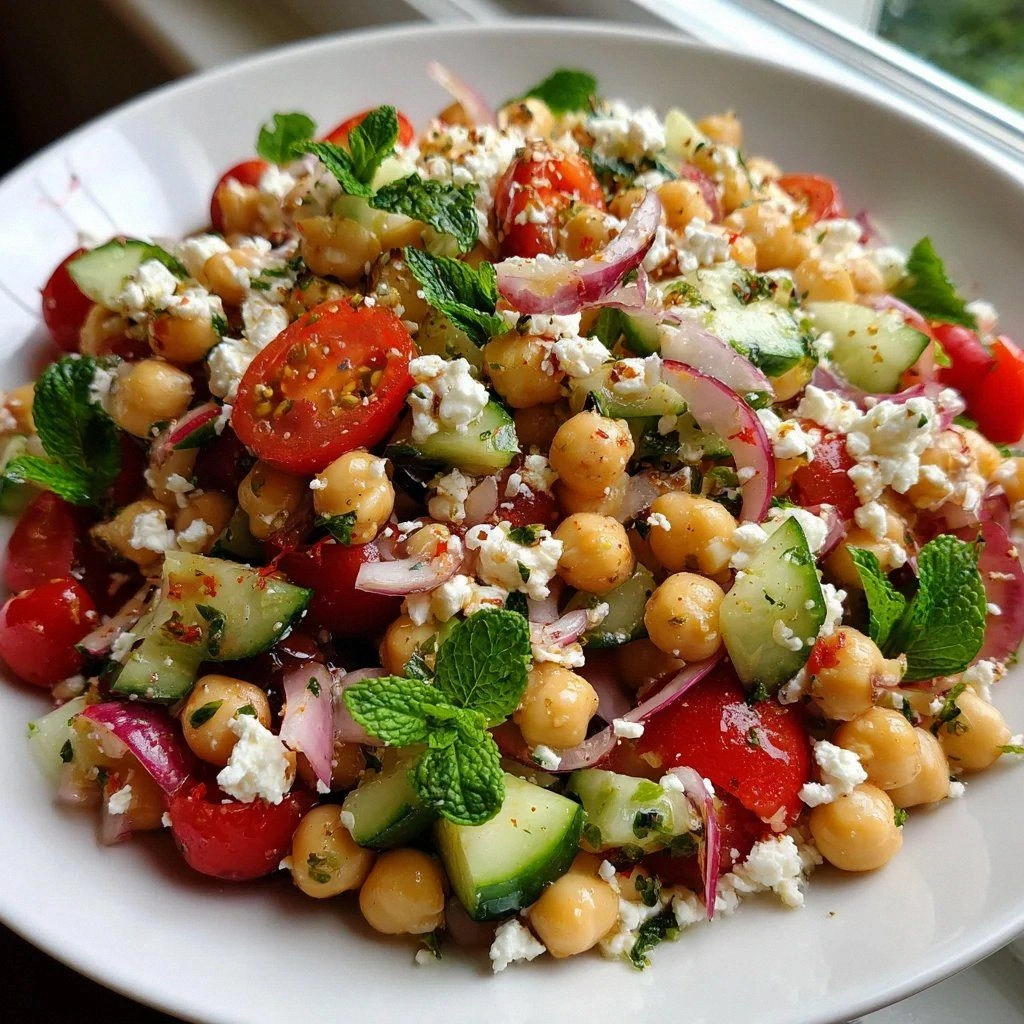
Picture this: the sun finally dips behind the apartment building next door, a lazy breeze drifts through the window, and you’re holding a chilled bowl of this Mediterranean Chickpea Feta Salad. Every bite is a confetti pop of juicy tomato, briny olive, and that creamy-tangy feta that makes you close your eyes involuntarily. The lemon-garlic dressing hugs each chickpea like it’s auditioning for a rom-com, while fresh herbs flutter in like they own the place. I dare you to taste this and not go back for seconds; I’ve watched self-proclaimed salad skeptics turn into full-time chickpea evangelists after a single forkful. What makes this version different? We treat humble pantry staples like VIPs: we season the chickpeas directly, macerate the onions so they behave, and finish with a whisper of mint that makes the whole thing taste like you’ve been teleported to a seaside taverna.
Most recipes get this completely wrong—they dump everything in a bowl, give a half-hearted stir, and call it a day. The result is a flat, watery mess that sits in the sad corner of the picnic table. Here’s what actually works: a quick salt-tinged marinade that wakes up the legumes, a two-stage dressing method that locks in brightness, and a final flourish of feta added only when the salad is cool so it stays perky rather than slumping into a chalky crumble. Stay with me here—this is worth it. By the end of this post you’ll know exactly when to add each ingredient, how to spot the perfect lemon (yes, there’s a perfect lemon), and why a humble spoonful of chickpea liquid from the can is liquid gold. Let me walk you through every single step—by the end you’ll wonder how you ever made it any other way.
What Makes This Version Stand Out
- Flavor Bomb: Instead of a one-note vinaigrette, we build layers—first a garlic-lemon soak for the chickpeas, then a glossy herb oil that clings to every nook. The result is a salad that tastes fully marinated, not superficially dressed.
- Texture Play: Creamy feta, crisp cucumber, and juicy tomatoes create a trifecta that keeps your palate guessing. Add the snap of red onion that’s been tamed in lemon juice and you’ve got a crunch spectrum worthy of a symphony.
- Zero Stove Time: Raw, refreshing, and blazing fast. If you can chop and squeeze, you can conquer this recipe. Perfect beach-day food when turning on the oven feels like a criminal offense.
- Meal-Prep Champion: Flavors meld and improve overnight, so make a double batch on Sunday and you’re lunch royalty until Thursday. The veggies stay perky thanks to a little salt science you’ll learn below.
- Flexitarian Friendly: Naturally vegetarian, gluten-free, and easily vegan with a plant-based feta swap. Bring it to a potluck and watch every dietary label feel personally catered to.
- Color Pop: We eat with our eyes first, and this bowl is basically a Mediterranean sunset: ruby tomatoes, emerald cucumber, obsidian olives, alabaster feta. Instagram can’t resist it, and neither will your guests.
Alright, let’s break down exactly what goes into this masterpiece...
Inside the Ingredient List
The Flavor Base
Chickpeas are the soul of this salad, so treat them like the star they are. Drain but don’t rinse them into bland oblivion; that starchy liquid clinging to the legumes is flavor equity. Add a pinch of salt and a squeeze of lemon right after draining and let them sit while you prep the rest—think of it as a quick spa treatment that seasons from the inside out. Skip this and you’ll wonder why your salad tastes flat even though you followed “everything else” perfectly.
Red onion brings subtle sweetness, but only after we discipline its harsh bite. A five-minute bath in fresh lemon juice tames the sulfur compounds, leaving you with a mild, almost pickled crunch. If you’re still onion-shy, swap in sliced green onions; they’re gentler and add a pop of color that plays nicely with the herbs.
The Texture Crew
Cherry tomatoes should feel heavy for their size and smell faintly earthy at the stem end—anything less and you’re signing up for watery disappointment. Halve most of them, but leave a few whole for juicy grenades that burst in your mouth. Cucumber adds spa-day freshness; I like the thin-skinned Persian variety so you can skip peeling. If all you have is a thick-skinned supermarket cuke, peel alternating stripes so you keep some color and crunch.
Kalamata olives are the salty umami bombs that make feta feel supported rather than alone on the flavor stage. Buy them pitted but whole, then halve them yourself—the pre-sliced ones taste metallic and sad. No Kalamatas? A good green olive works, but steer clear of canned black “ripe” olives; they’re flavor voids dressed in dyed clothing.
The Unexpected Star
Feta in brine is non-negotiable. The pre-crumbled dry stuff is convenient the way flip phones are convenient: technically functional but missing all the joy. A block stored in salt water stays creamy and tangy, ready to crumble into irregular chunks that catch the dressing. Vegan? Grab a almond-milk based feta that comes packed in liquid; it won’t have the same tang but will still bring salty richness.
The Final Flourish
Fresh herbs are the difference between “yeah, that’s good” and “wow, what IS this?” Use flat-leaf parsley for grassy backbone and mint for cool top notes. Basil can sub in for mint if you’re channeling Capri vibes, and dill adds a fennel whisper that plays beautifully with cucumber. Olive oil should smell fruity and peppery; if it smells like nothing, it’ll taste like nothing. Lemon juice needs to be fresh—bottled juice tastes like furniture polish and will murder your salad. Finally, dried oregano is the earthy bridge that shouts “Mediterranean” even before you take a bite.
Everything’s prepped? Good. Let’s get into the real action...
The Method — Step by Step
- Drain two 15-ounce cans of chickpeas into a colander set in the sink. Resist the urge to rinse; you want that starchy cloak for seasoning adhesion. While they drip, halve a lemon and squeeze half of it over the chickpeas, then shower them with a big pinch of kosher salt. Give the colander a gentle shake—think hula dance, not mosh pit—and let them marinate while you mince, slice, and dice. That sizzle you hear? It’s the sound of flavor molecules waking up and stretching.
- Grab a small bowl and think of it as the onion spa. Thinly slice half a medium red onion into half-moons so thin you could read a newspaper through them. Cover with 2 tablespoons fresh lemon juice and a pinch of salt, then swish around with your fingers—yes, fingers—so you can feel when the slices relax. Set a timer for five minutes; that’s enough time to mellow the bite without turning them into limp ribbons.
- Now for the veggie choreography: halve your cherry tomatoes, dice cucumber into bite-size moons, and slice Kalamata olives in half lengthwise so they mimic the tomato shape. This isn’t just aesthetics; matching shapes mean every forkful is a balanced bite instead of a game of chase-the-olive. Toss all three into your serving bowl but keep feta hostage for later; it’s a diva that enters only after the stage is set.
- Herb time. Pluck a generous cup of flat-leaf parsley leaves, enough to fill your cupped palms when lightly packed. Mint is more potent, so aim for a modest third of a cup. Stack leaves, roll like a cigar, and chiffonade into thin ribbons. The smell should hit you like a mountain meadow after rain; if it doesn’t, your herbs are past prime and deserve a compost burial.
- The dressing builds in two acts. Act one: whisk remaining lemon juice with minced garlic, dried oregano, and a pinch of salt until the salt dissolves. Act two: stream in extra-virgin olive oil in a thin drizzle while whisking like you’re beating an egg. The emulsion should look glossy, like liquid sunshine captured in a bottle. Taste—it should make your tongue sing a high C of acidity; adjust with more oil if it puckers too hard.
- Back to the onions. By now they’ve relaxed into coral-colored confetti. Fish them out with a fork, letting excess lemon juice drip back into the bowl—this liquid is flavor gold we’ll reuse. Scatter the onions over the veggies, then pour the chickpeas on top. The layering matters; chickpeas are sturdy and will sink, protecting delicate herbs from bruising when we toss.
- Here’s the game-changer: drizzle just two tablespoons of the dressing over the chickpeas, then cover the bowl with a plate and shake it like a maraca for five seconds. This micro-marination permeates the legumes so they’re flavorful to the core. Uncover and admire the glisten—each chickpea should look like it’s wearing a thin coat of satin.
- Now the fun part. Shower the herbs over everything, crumble half the feta into chunky nuggets, and add a few cracks of black pepper. Pour remaining dressing, toss gently with a large spoon, and finish with the rest of the feta on top so you get visible snowy peaks that scream “eat me.” Cover and refrigerate at least 15 minutes; this brief chill lets flavors meld without muting the brightness.
That’s it—you did it. But hold on, I’ve got a few more tricks that’ll take this to another level...
Insider Tricks for Flawless Results
The Temperature Rule Nobody Follows
Salad is only as perky as its ingredients, and nothing wilts herbs faster than a lukewarm bowl. Chill your serving bowl in the freezer for five minutes while you prep; the quick frost keeps herbs crisp and cucumbers snappy. A friend once skipped this step and served what looked like a Monet left in the sun—still tasty, but the texture was sulky and sad.
Why Your Nose Knows Best
Before juicing the lemon, zest a thin strip with a microplane and whisk that oil-packed zest into the dressing. The volatile oils add floral top notes that fade when exposed to heat, so this tiny step amplifies citrus perfume without extra acid. Trust me, your kitchen will smell like an Amalfi Coast souvenir shop.
The 5-Minute Rest That Changes Everything
After you toss the salad, let it sit covered for five minutes—not ten, not twenty—then serve. This micro-marination lets salt draw juices from tomatoes and cucumbers, creating a light, natural sauce that glazes every bite. Rest longer and veggies start surrendering too much water, turning your masterpiece into soup.
Creative Twists and Variations
This recipe is a playground. Here are some of my favorite ways to switch things up:
Fire-Roasted Fiesta
Swap parsley for cilantro, use lime juice instead of lemon, and fold in roasted corn kernels plus a diced avocado. Add a pinch of smoked paprika and suddenly you’ve got a salad that tastes like a beach party in Tulum.
Protein Powerhouse
Toss in a cup of shredded rotisserie chicken or a can of oil-packed tuna for a bistro-worthy lunch that keeps you full through afternoon meetings. The briny olives already harmonize with seafood, so the fusion feels intentional, not desperate.
Grain Bowl Glow-Up
Stir in two cups of cooked farro or quinoa and suddenly the salad graduates from side to centerpiece. The grains sop up the dressing, giving you a picnic-friendly dish that won’t wilt on a buffet table.
Storing and Bringing It Back to Life
Fridge Storage
Pack leftovers into an airtight glass container and refrigerate up to four days. Layer a paper towel on top before sealing; it absorbs excess moisture and keeps herbs perky. Give the container a gentle shake before serving to redistribute dressing.
Freezer Friendly
Don’t freeze the finished salad—cucumbers and tomatoes turn into icy mush. Instead, freeze the marinated chickpeas in a zip-top bag for up to two months. Thaw overnight, then assemble fresh veggies and herbs for a lightning-fast meal.
Best Reheating Method
There is no reheating—this is a cold salad, people. But if you pulled it straight from a 35-degree fridge, let it sit on the counter for ten minutes so the olive oil loosens and flavors bloom. A tiny splash of fresh lemon juice perks everything up like morning coffee for your taste buds.