Picture this: a rainy Thursday night, the kind that makes you crave something that feels like a warm hug from the inside out. I was staring at a half‑cooked salmon that looked more like a sad, pale pancake than the glorious dish I’d imagined. The kitchen was a symphony of clattering pans, the faint hiss of the oven, and the distant rumble of thunder that seemed to shout, “You need comfort, pronto!” I grabbed the nearest jar of red curry paste, a can of coconut milk, and a daring idea sparked—what if I turned that bland fish into a tropical masterpiece that could out‑shine any take‑out box?
The moment the coconut milk hit the pan, a fragrant cloud rolled out like a tropical storm, wrapping the whole apartment in buttery, citrusy whispers. I could hear the gentle sizzle of butter melting, feel the buttery gloss on the skillet, and taste the first hint of sweet‑heat dancing on my tongue before even tasting it. My senses were on a roller coaster: the bright yellow of the curry paste, the creamy white swirl of coconut, the pink blush of the salmon as it began to caramelize. It was a full‑on sensory overload, the kind you only get when a recipe finally clicks after countless failed attempts.
Most coconut curry salmon recipes I've tried either drown the fish in sauce or leave it dry and bland. This version, however, strikes a perfect balance—silky sauce that clings to each bite like a second skin, while the salmon stays tender, flaky, and just‑the‑right‑amount of crisp on the edges. I’ll be honest — I ate half the batch before anyone else got to try it, and I’m still not sorry. The secret? A quick sear that creates a caramelized crust, followed by a gentle simmer that lets the flavors meld without turning the fish into a mushy mess.
And here’s the kicker: I’m about to reveal a little trick involving a splash of lime and a pinch of brown sugar that will make the sauce sing like a choir of angels. I dare you to taste this and not go back for seconds. Let me walk you through every single step — by the end, you’ll wonder how you ever made it any other way.
What Makes This Version Stand Out
- Flavor Explosion: The combination of red curry paste, coconut milk, and fresh lime creates a bright, layered taste that hits you with heat, sweetness, and acidity all at once, making each bite unforgettable.
- Texture Harmony: A quick sear gives the salmon a crisp edge that shatters like thin ice, while the interior stays buttery soft, and the sauce coats the fish like velvet.
- Simplicity Meets Sophistication: You only need a handful of pantry staples, yet the dish feels restaurant‑worthy, proving you don’t need a culinary degree to impress.
- Ingredient Quality: Using fresh, wild‑caught salmon and a high‑quality coconut milk makes the difference between “good” and “hands down the best version you’ll ever make at home.”
- Crowd‑Pleaser Factor: Whether it’s a weekday dinner or a weekend dinner‑party showstopper, the aromatic sauce draws people to the table like moths to a flame.
- Make‑Ahead Friendly: The sauce actually tastes better the next day once the flavors have had time to marry, so you can prep ahead without losing any wow factor.
- Healthy Yet Indulgent: Packed with omega‑3s, the dish offers heart‑healthy benefits while still feeling decadently creamy.
- Versatile Base: This sauce doubles as a base for soups, grain bowls, or even a dipping sauce for veggies, extending its life far beyond the salmon.
Inside the Ingredient List
The Flavor Base
Coconut Milk (1 can, 14 oz): This is the buttery backbone that carries the curry heat while adding a subtle sweetness. If you skip it, you’ll lose that luscious mouthfeel and the sauce will feel thin. Opt for full‑fat coconut milk for richness; lite versions dilute the flavor. Pro tip: Give the can a good shake before opening to ensure the cream is evenly distributed.
Red Curry Paste (2 Tbsp): The star of the show, delivering depth, heat, and aromatic complexity. A cheap paste can be salty and dull, so I recommend a brand with fresh chilies and lemongrass. If you’re a heat‑shy friend, halve the amount and add a dash of honey later to balance.
Fresh Lime Juice (1 Tbsp): The acidity cuts through the richness, brightening the sauce like a splash of sunlight. Missing this step makes the dish taste cloying. For extra zing, zest the lime before juicing and toss the zest into the pan at the end.
The Texture Crew
Salmon Fillets (4 × 6‑oz): The hero of the dish. Wild‑caught salmon offers firmer flesh and a richer flavor than farmed varieties. If you can’t find fresh, a good quality frozen fillet works—just thaw it in the fridge overnight. Pat the fish dry before searing; moisture is the enemy of a crisp crust.
Olive Oil (1 Tbsp) & Butter (1 Tbsp): A combo that ensures the salmon gets a golden crust without burning. The oil raises the smoke point, while butter adds a nutty finish. Skip the butter and you’ll miss that subtle caramel flavor that makes the edges “shatter like thin ice.”
Garlic (2 cloves, minced) & Ginger (1 Tbsp, grated): These aromatics build a fragrant foundation. Garlic brings warmth, ginger adds a peppery bite, and together they lift the curry paste to new heights. If you’re out of fresh ginger, a teaspoon of ground ginger works in a pinch, but the zing won’t be as vivid.
The Unexpected Star
Fish Sauce (1 Tbsp): A splash of umami that deepens the sauce without making it taste fishy. It’s the secret ingredient most home cooks overlook. Use a high‑quality Thai fish sauce; cheap versions can be overly salty.
Brown Sugar (1 tsp): Balances the heat and acidity with a gentle caramel note. Omit it and the curry may taste sharp; add a pinch more if you love a sweeter profile.
The Final Flourish
Fresh Cilantro (¼ cup, chopped): Adds a bright, herbaceous finish that lifts the heavy creaminess. If cilantro isn’t your thing, try Thai basil for a slightly spicier note.
Salt & Pepper (to taste): Essential seasoning that brings all the flavors together. Never underestimate the power of a pinch of sea salt right before serving; it makes the sauce sing.
Everything's prepped? Good. Let's get into the real action...
The Method — Step by Step
Heat a large skillet over medium‑high heat and add the olive oil and butter. As soon as the butter foams, you’ll hear a gentle sizzle—this is your cue that the pan is hot enough. Pat the salmon fillets dry with paper towels, then season both sides with salt and pepper. Place the fillets skin‑side down (if they have skin) and let them sear undisturbed for 3‑4 minutes; you’ll see the edges start to turn opaque and the skin will crisp up like a golden wafer. Flip carefully and sear the other side for another 2 minutes, then remove the fish to a plate and set aside.
Kitchen Hack: If the fillets stick, add a splash of water to the pan; the steam will release them without tearing the flesh.In the same skillet, lower the heat to medium and add the minced garlic and grated ginger. The kitchen fills with an intoxicating aroma that makes you want to inhale deeply—trust me, this is the moment your nose knows best. Stir continuously for about 30 seconds, just until the garlic turns a light golden, being careful not to let it burn. Then, spoon in the red curry paste, letting it mingle with the aromatics; the paste should sizzle and darken slightly, releasing its spices into the oil.
Now, pour in the coconut milk, scraping the bottom of the pan to dissolve any browned bits—those are flavor gold. Bring the mixture to a gentle simmer, watching as it swirls into a creamy, amber‑colored sauce. At this stage, add the fish sauce and brown sugar, stirring until fully dissolved. The sauce should emit a sweet‑savory steam that teases your taste buds; if it smells too sharp, add a pinch more sugar.
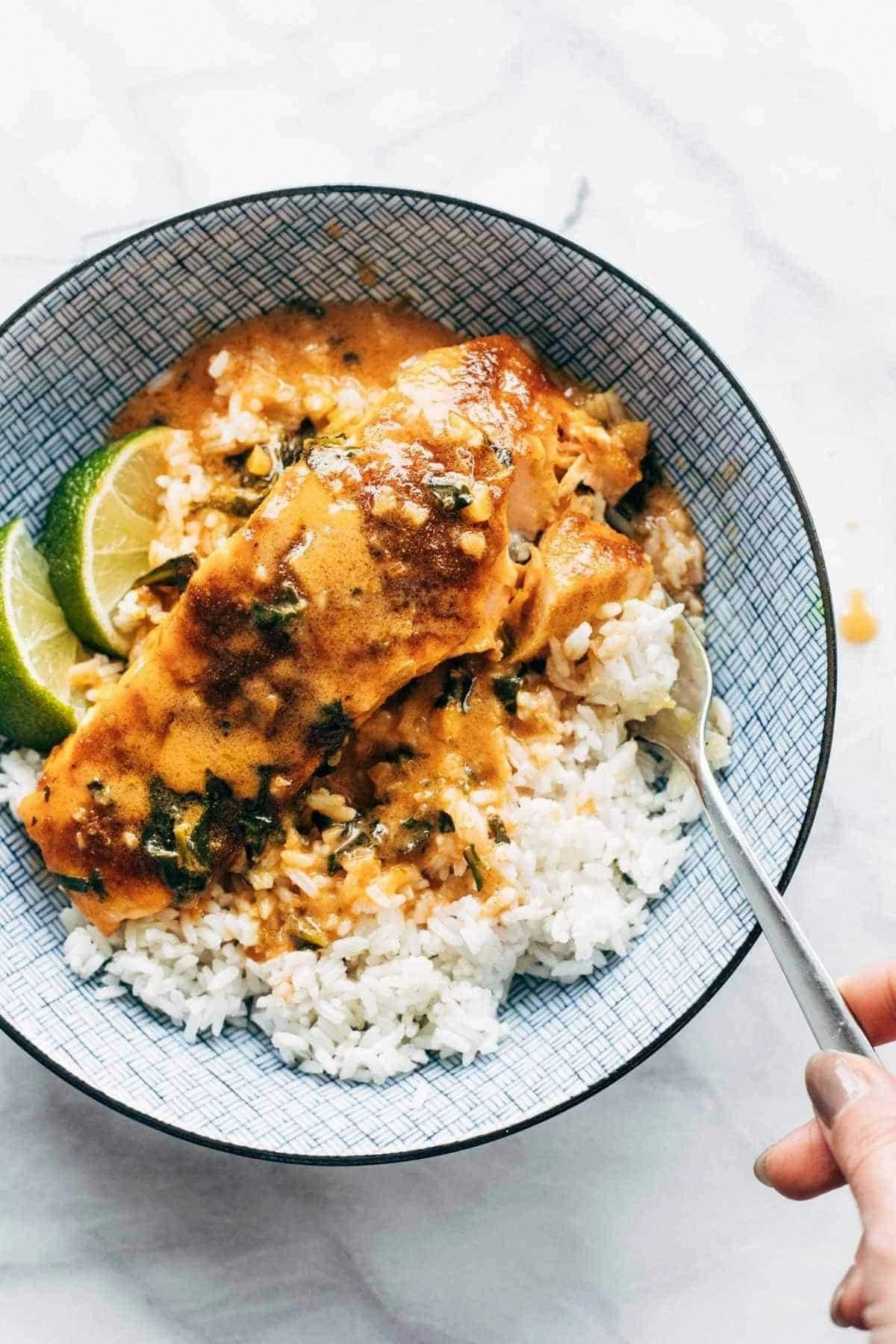
Return the seared salmon to the pan, skin side up, and spoon a generous amount of the sauce over each piece. Reduce the heat to low, cover, and let it simmer for 8‑10 minutes. You’ll notice the fish gradually pulling away from the bones, a sign that it’s perfectly cooked through. The sauce will thicken slightly, clinging to the fillets like a glossy coat.
Watch Out: Do not crank the heat up during this simmer; rapid boiling will cause the coconut milk to separate, leaving you with a curdled sauce.While the salmon finishes, taste the sauce and adjust seasoning. Add the fresh lime juice now—this brightens the entire dish, making the flavors pop like fireworks. If the sauce feels too thick, whisk in a splash of water or extra coconut milk until you reach a silky consistency that coats the back of a spoon.
When the salmon is just about done, sprinkle the chopped cilantro over the top, letting the herb wilt slightly into the hot sauce. This final flourish adds a fresh, green note that balances the richness. Give everything a gentle toss to ensure the herb is evenly distributed, but be careful not to break the delicate fillets.
Remove the skillet from the heat and let the dish rest for two minutes. This short rest allows the flavors to settle and the sauce to thicken just a touch more. It also gives you a moment to admire the glossy, amber glaze that now cloaks each piece of salmon.
Serve the coconut curry salmon over jasmine rice, quinoa, or cauliflower rice for a low‑carb option. Spoon extra sauce over the grains, let the steam rise, and watch your guests' eyes widen. That sizzle when it hits the plate? Absolute perfection. And now the fun part—watch them dig in and try to guess the secret ingredient.
Kitchen Hack: Warm the serving bowls before plating; this keeps the rice from cooling the sauce too quickly, preserving that restaurant‑level temperature.
That's it — you did it. But hold on, I've got a few more tricks that'll take this to another level...
Insider Tricks for Flawless Results
The Temperature Rule Nobody Follows
Never cook salmon straight from the fridge. Let the fillets sit at room temperature for 15‑20 minutes before searing; this ensures a uniform cook and prevents the interior from staying cold while the exterior over‑crisp. I once tried to skip this step and ended up with a salmon that looked perfect on the outside but was practically icy in the middle. Trust me, the extra wait is a small price for flawless texture.
Why Your Nose Knows Best
Before you even taste, let the aroma guide you. If the sauce smells flat after adding the coconut milk, it likely needs a splash of lime or a pinch more sugar. Your nose can detect imbalances that your palate might miss, especially when the heat of the curry masks subtleties. So, pause, inhale deeply, and adjust accordingly.
The 5‑Minute Rest That Changes Everything
After the salmon finishes simmering, give it a five‑minute rest off the heat. This allows the proteins to relax and the juices to redistribute, resulting in a buttery bite rather than a dry one. I used to serve it immediately and noticed a slight “dry edge” on the fish. This tiny pause turns that edge into silk.
Layered Salt for Depth
Season in stages: a pinch of salt on the fish before searing, a dash in the sauce, and a final sprinkle of flaky sea salt right before serving. Each layer builds depth, preventing the dish from tasting flat. One friend tried a single salt addition and reported the sauce felt “under‑seasoned.” Layering solves that.
Butter Finish for Gloss
Just before plating, whisk in an extra half‑tablespoon of cold butter into the hot sauce. This emulsifies the sauce, giving it a glossy finish that looks as good as it tastes. The trick is to add the butter off the heat, or you’ll lose the silkiness. This is the final polish that makes the dish look Instagram‑ready.
Creative Twists and Variations
This recipe is a playground. Here are some of my favorite ways to switch things up:
Thai Basil Boost
Swap cilantro for a generous handful of Thai basil leaves added at the very end. The basil adds an anise‑like punch that pairs beautifully with the coconut base, especially if you love a more herbaceous profile.
Spicy Mango Salsa
Top the salmon with a fresh mango salsa—diced mango, red onion, jalapeño, and lime juice. The sweet‑spicy fruit contrast lifts the curry sauce and adds a refreshing crunch, perfect for summer evenings.
Nutty Crunch
Toast a handful of sliced almonds or cashews and sprinkle them over the finished dish. The nutty crunch adds texture and a subtle buttery flavor that complements the creamy sauce.
Vegan Switch
Replace salmon with firm tofu or tempeh, pressing it first to remove excess moisture. Follow the same searing steps, and you’ll have a plant‑based version that still delivers that luxurious coconut curry coating.
Smoky Paprika Twist
Add a teaspoon of smoked paprika to the curry paste before simmering. This introduces a smoky depth, turning the dish into a cozy, hearth‑style comfort meal that’s perfect for cooler months.
Low‑Carb Coconut Cream
Swap regular coconut milk for coconut cream diluted with a splash of water. You’ll get an even richer sauce with fewer carbs, ideal for keto enthusiasts who still want that tropical vibe.
Storing and Bringing It Back to Life
Fridge Storage
Transfer leftovers to an airtight container and refrigerate within two hours. The sauce will thicken slightly as it cools, but it stays fresh for up to three days. When reheating, add a splash of water or coconut milk and stir gently over low heat to restore that silky texture.
Freezer Friendly
Both the salmon and the sauce freeze beautifully. Portion the dish into freezer‑safe bags, separate the fish from the sauce if you prefer. Freeze for up to two months. To defrost, move to the fridge overnight, then reheat gently on the stovetop, adding a little liquid to prevent drying.
Best Reheating Method
Use a low‑heat skillet or a saucepan, and bring the sauce back to a gentle simmer, stirring constantly. Avoid microwaving, as it can cause the coconut milk to separate. A tiny splash of water before reheating creates steam that revives the sauce’s gloss—think of it as a second life for your masterpiece.