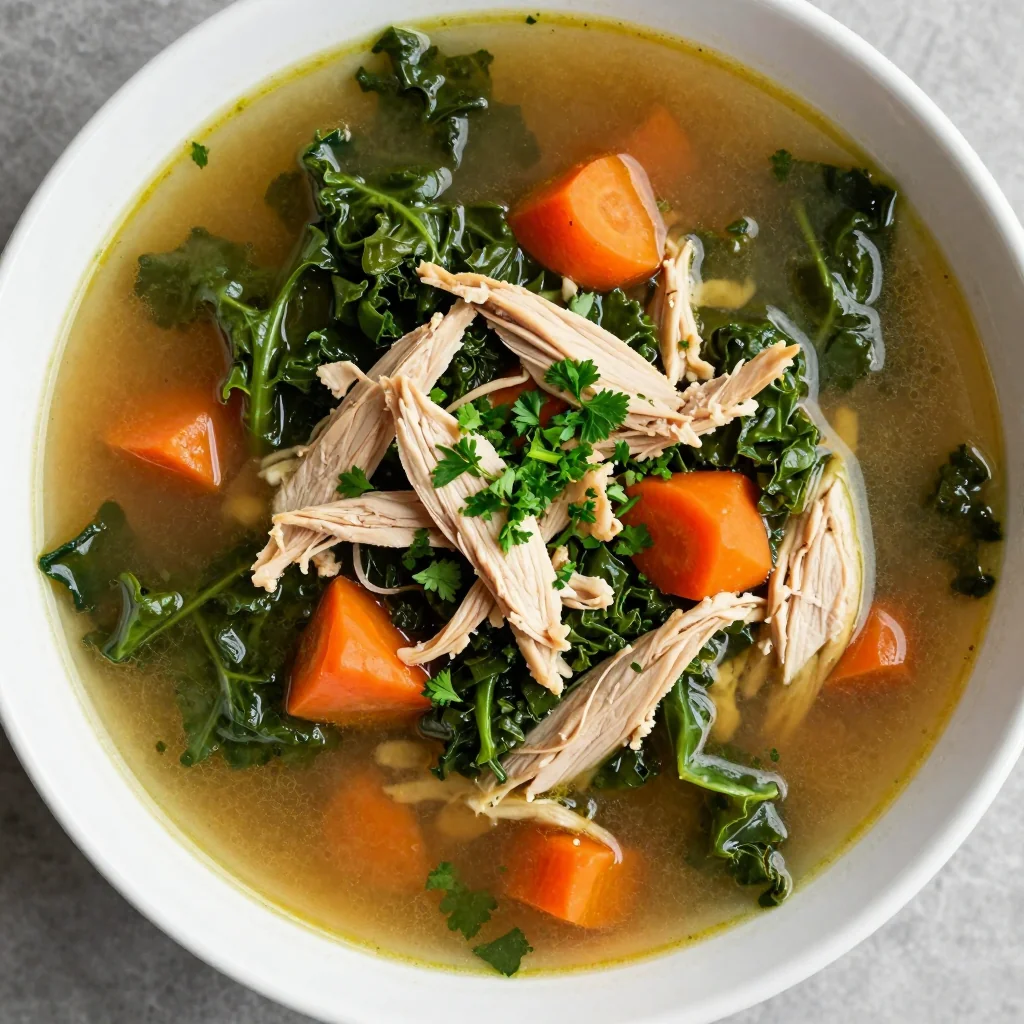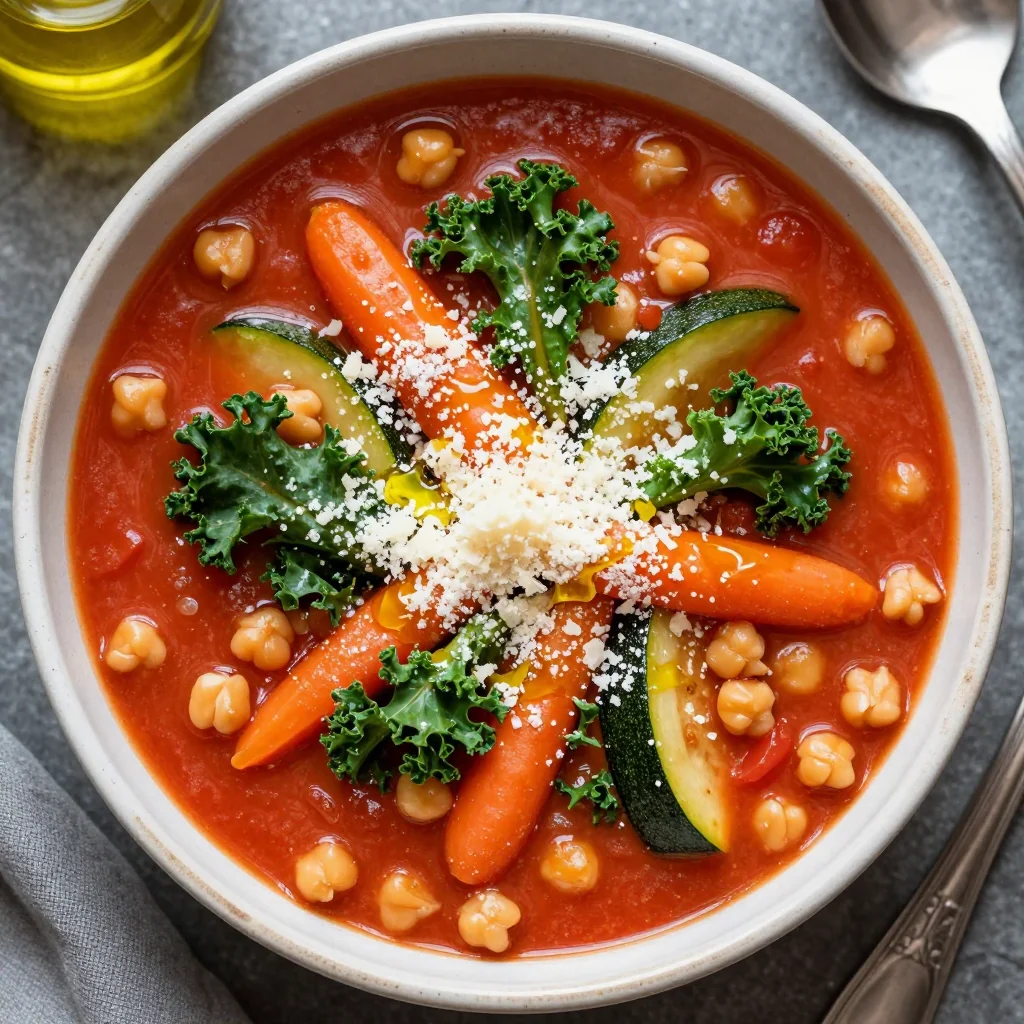
Love this? Pin it for later! 📌
A soul-warming, budget-smart Italian classic made entirely from shelf-stable staples.
When I was in graduate school, my grocery budget was so tight it squeaked. One particularly brutal February, a polar vortex had trapped half the Midwest indoors, the campus shuttle was down, and my bank-account balance read $14.63. I remember staring into my pantry—one shelf above the microwave—hoping for a miracle. What I found were random half-used bags of pasta, a dented can of cannellini beans, a lonely potato, and a tiny can of tomato paste. Instead of despairing, I dumped everything into my thrift-store Dutch oven, added water and a crumbled bouillon cube, and crossed my fingers. Forty minutes later the apartment smelled like a trattoria, my roommates appeared with spoons in hand, and my forever-favorite pantry minestrone was born.
Since then I’ve tweaked the formula dozens of times, but the spirit remains unchanged: honest ingredients you probably have right now, a single pot, zero waste, and a result so comforting you’ll swear Nonna snuck in while you weren’t looking. Serve it with yesterday’s bread, a drizzle of the good olive oil you save for special occasions, and dinner is done.
Why This Recipe Works
- Pantry-Only Promise: Every ingredient is shelf-stable, so you can cook dinner without leaving the house.
- One-Pot Wonder: Minimal dishes, maximum flavor—everything simmers together in the same Dutch oven.
- Build-Your-Own Veg: Use whatever canned, frozen, or slightly wrinkled fresh produce you have.
- Cook Once, Eat Twice: Flavor improves overnight, making leftovers the gift that keeps on giving.
- Plant-Powered Protein: Beans + pasta deliver a complete amino-acid profile without meat.
- Under-a-Buck a Bowl: Serves six for about the cost of a single take-out entrée.
- Weeknight Fast: 10 minutes active time, 30 minutes simmering—perfect for busy schedules.
- Freezer-Friendly: Portion, freeze flat, and reheat straight from solid for instant comfort.
Ingredients You'll Need
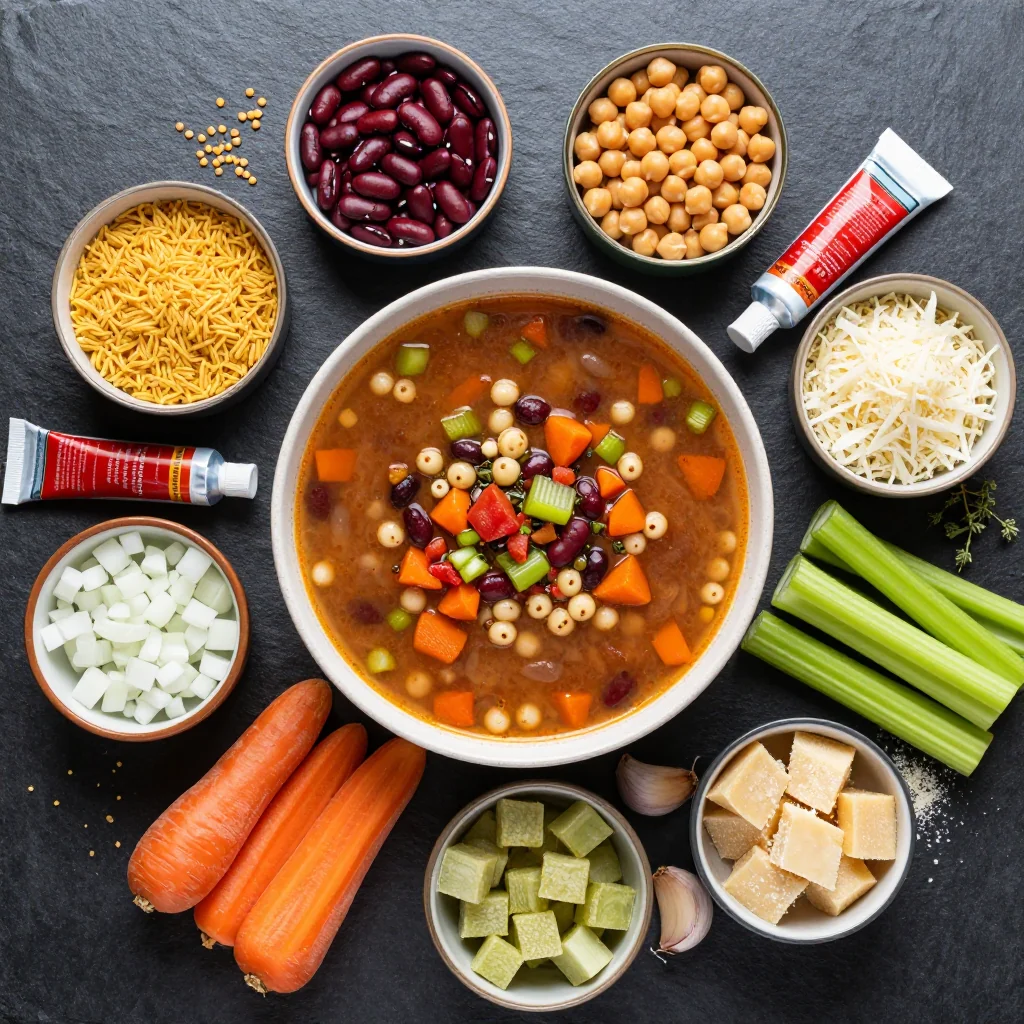
Pantry minestrone is the poster child of flexible cooking. Below are the everyday staples I reach for, plus suggestions for when the cupboard looks different than you expected.
- Olive oil (2 Tbsp) – A glug of decent extra-virgin oil perfumes the soffritto. If you’re out, any neutral oil will do, but finish with a drizzle of whatever fat you love—bacon grease, chili oil, or even pesto.
- Yellow onion (1 medium) – The aromatic backbone. Swap with a large shallot or two bunches of scallions in a pinch.
- Carrots (2 medium) – Sweet counterpoint to the acid in tomatoes. No fresh carrots? Stir in a drained can of sliced carrots during the last ten minutes.
- Celery (2 ribs) – Adds herbal bitterness. If you dislike celery or simply don’t have it, a teaspoon of celery seed or a sprinkle of fennel seeds works magic.
- Garlic (3 cloves) – Fresh is ideal, but ½ teaspoon granulated garlic bloomed in oil will do.
- Tomato paste (2 Tbsp) – Concentrated umami. Buy the cheap tube kind; it lasts forever in the fridge door.
- Dried oregano (1 tsp) + dried basil (1 tsp) – Classic Italian duo. If your spice drawer contains “Italian seasoning,” use 2 teaspoons of that instead.
- Bay leaf (1) – Subtle woodsy note. Remove before serving.
- Low-sodium vegetable broth (6 cups) – Water + bouillon cubes is perfectly acceptable; reduce added salt accordingly.
- Canned diced tomatoes (14 oz) – Fire-roasted or plain both work. Crushed tomatoes create a thicker broth.
- Canned beans (15 oz, any variety) – Cannellini, kidney, chickpeas, or black beans—whatever you stock. Rinse to remove 40% of the sodium.
- Small pasta (1 cup) – Ditalini, orzo, broken spaghetti, even alphabet noodles. Whole-wheat ups the fiber if that’s your thing.
- Starch of choice (1 medium potato or ½ cup rice) – Gives body. Sweet potato cubes add color and nutrients.
- Frozen mixed vegetables (1 cup) – The ultimate convenience veg. Canned veg (drained) or that lone zucchini you forgot about both welcome.
- Canned or frozen greens (1 cup) – Spinach, kale, escarole, or collards. Vitamin boost with zero effort.
- Salt & pepper – Add at the end; broth and canned goods vary wildly in salinity.
- Optional but awesome: Parmesan rind, splash of balsamic, pinch of chili flakes, squeeze of lemon, or a spoonful of pesto for finishing.
How to Make Budget-Friendly Pantry Minestrone for Dinner
Warm the Pot
Place a heavy 4-quart Dutch oven or soup pot over medium heat for 60 seconds. You want the pot hot enough that a drop of water skitters, not hisses. Add olive oil and swirl to coat the surface evenly; this prevents onions from sticking and creates the flavor base Italians call soffritto.
Sauté Aromatics
Add diced onion, carrot, and celery. Reduce heat to medium-low; sweat, stirring every minute or so, until vegetables soften and the onion turns translucent—about 6–7 minutes. Patience here builds depth; browning isn’t necessary (and can even taste bitter in brothy soups). Add garlic; cook 45 seconds, just until fragrant.
Bloom the Tomato Paste
Clear a hot spot in the center; dollop in tomato paste. Let it sizzle undisturbed for 30 seconds, then stir to coat vegetables. Caramelizing the paste intensifies sweetness and eliminates any metallic canned taste. Stir in oregano, basil, and bay leaf; cook 30 seconds more.
Deglaze with Broth
Pour in 1 cup broth; scrape the pot’s bottom with a wooden spoon to loosen any browned bits. These fond particles equal free flavor. Once the bottom is smooth, add remaining broth, diced tomatoes with juice, and Parmesan rind if using. Increase heat to high; bring to a lively simmer.
Add the Starch
Stir in diced potato or rice. Reduce heat to maintain a gentle bubble; cover partially and cook 10 minutes (12 for rice). Potatoes should be just tender enough to pierce with a fork.
Introduce Pasta & Beans
Add pasta and drained beans; simmer 8–9 minutes, stirring every couple of minutes to prevent sticking. Pasta releases starch, naturally thickening the broth. For gluten-free, use rice and let it simmer 15 minutes total.
Finish with Frozen Greens
Stir in frozen vegetables and greens; cook 2–3 minutes until bright and tender. Frozen produce is flash-preserved at peak ripeness, so you get vibrant flavor and nutrition without a trip to the store.
Season & Serve
Fish out bay leaf and Parmesan rind. Taste; add salt gradually—½ teaspoon at a time—until flavors pop. Finish with black pepper, a squeeze of lemon, and a drizzle of olive oil. Ladle into warm bowls and shower with grated cheese if you’ve got it.
Expert Tips
Control the Broth
If you prefer a brothy soup, cook pasta separately and add at the end; otherwise embrace the velvety starch that naturally thickens the pot.
Low & Slow Flavor
Got time? After step 4, transfer the pot to a 250 °F oven for 1 hour; finish steps 5–8 on the stovetop. Slow heat coaxes out sweetness you never knew existed.
Brighten at the End
A splash of vinegar or citrus wakes up canned tomato flavor. Add after cooking; acids can toughen beans if introduced early.
Stretch Further
Hosting unexpected guests? Stir in an extra cup of water and a handful of quick-cooking red lentils; they’ll be tender in 10 minutes and double the protein for pennies.
Overnight Magic
Refrigerate finished soup overnight; the pasta will absorb broth. Reheat with a splash of water and serve as a hearty stew with crusty bread.
Variations to Try
- Tuscan White Bean & Rosemary Swap canned great northern beans, use potato gnocchi instead of pasta, and finish with fresh rosemary and a swirl of cream.
- Spicy Calabrian Stir in 1 teaspoon Calabrian chili paste with the tomato paste and garnish with shaved pecorino.
- Protein Boost Add a drained can of tuna or last night’s shredded chicken during the last 3 minutes for omnivore appeal.
- Gluten-Free Grains Replace pasta with millet, sorghum, or gluten-free couscous; adjust simmer time per package directions.
- Creamy Tomato Base Blend an extra can of tomatoes until smooth; reduce broth by 1 cup for a velvety tomato-vegetable hybrid.
- Curry Pantry Soup Swap Italian herbs for 1 tablespoon yellow curry powder and finish with coconut milk instead of olive oil.
Storage Tips
Refrigerate: Cool soup to lukewarm, then store in airtight containers up to 4 days. Keep in mind that pasta continues to swell, so the texture will thicken each day. Add a splash of broth or water when reheating.
Freeze: Portion into quart-size freezer bags, squeeze out excess air, and freeze flat up to 3 months. Thaw overnight in the fridge or microwave on 50 % power. Alternatively, freeze broth base without pasta; cook pasta fresh and combine upon reheating for al-dente texture.
Meal-Prep Lunches: Ladle single servings into microwave-safe jars; refrigerate up to 4 days. A 2-minute zap on high plus a slice of bread equals the cheapest desk lunch you’ll ever love.
Frequently Asked Questions
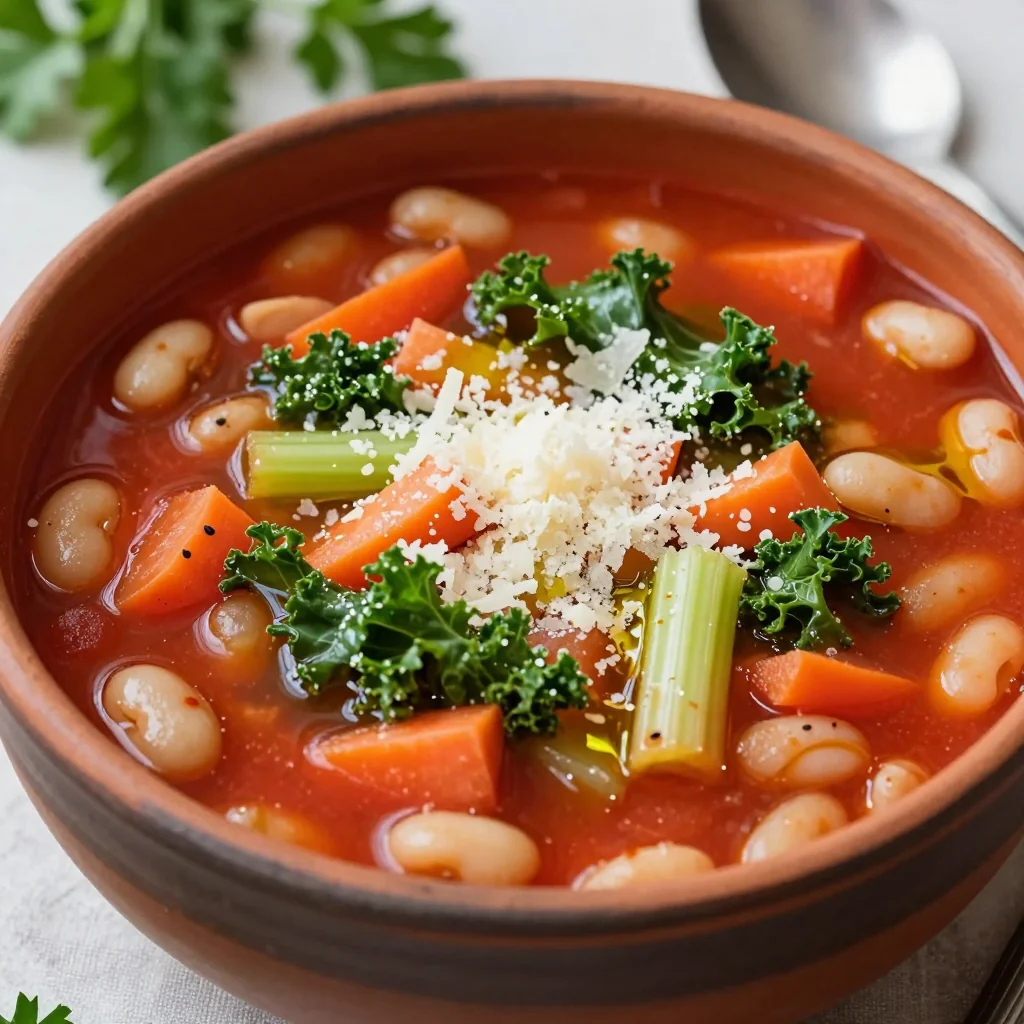
Budget-Friendly Pantry Minestrone for Dinner
Ingredients
Instructions
- Soften aromatics: Heat olive oil in a Dutch oven over medium-low. Add onion, carrot, celery; cook 6–7 min until translucent. Stir in garlic 45 sec.
- Build base: Clear center; add tomato paste, oregano, basil, bay leaf. Cook 1 min, stirring constantly.
- Simmer foundation: Deglaze with 1 cup broth, scraping bits. Add remaining broth, tomatoes, Parmesan rind (if using), and potato. Simmer 10 min.
- Add pasta & beans: Stir in pasta and beans; cook 8–9 min until pasta is al dente.
- Finish vegetables: Add frozen vegetables and greens; simmer 2–3 min until heated through.
- Season & serve: Remove bay leaf and rind. Salt and pepper to taste. Finish with olive oil, cheese, or herbs as desired.
Recipe Notes
Pasta continues to absorb broth upon standing. Thin leftovers with water or broth and reheat gently. Flavor improves overnight.