I was in the middle of a frantic Sunday brunch, juggling a pan of sizzling bacon, a pot of coffee that threatened to overflow, and a sudden, insistent craving for something that felt both sophisticated and playful. I grabbed a lemon, a handful of almonds, and a bag of powdered sugar, and thought, “What if I could turn this kitchen chaos into a tiny, citrus‑kissed masterpiece?” The next hour became a whirlwind of cracked egg whites, the whir of the stand mixer, and the faint, intoxicating perfume of lemon zest wafting through the apartment. I swear the whole building paused to sniff that bright, tangy aroma, and I knew I was onto something big.
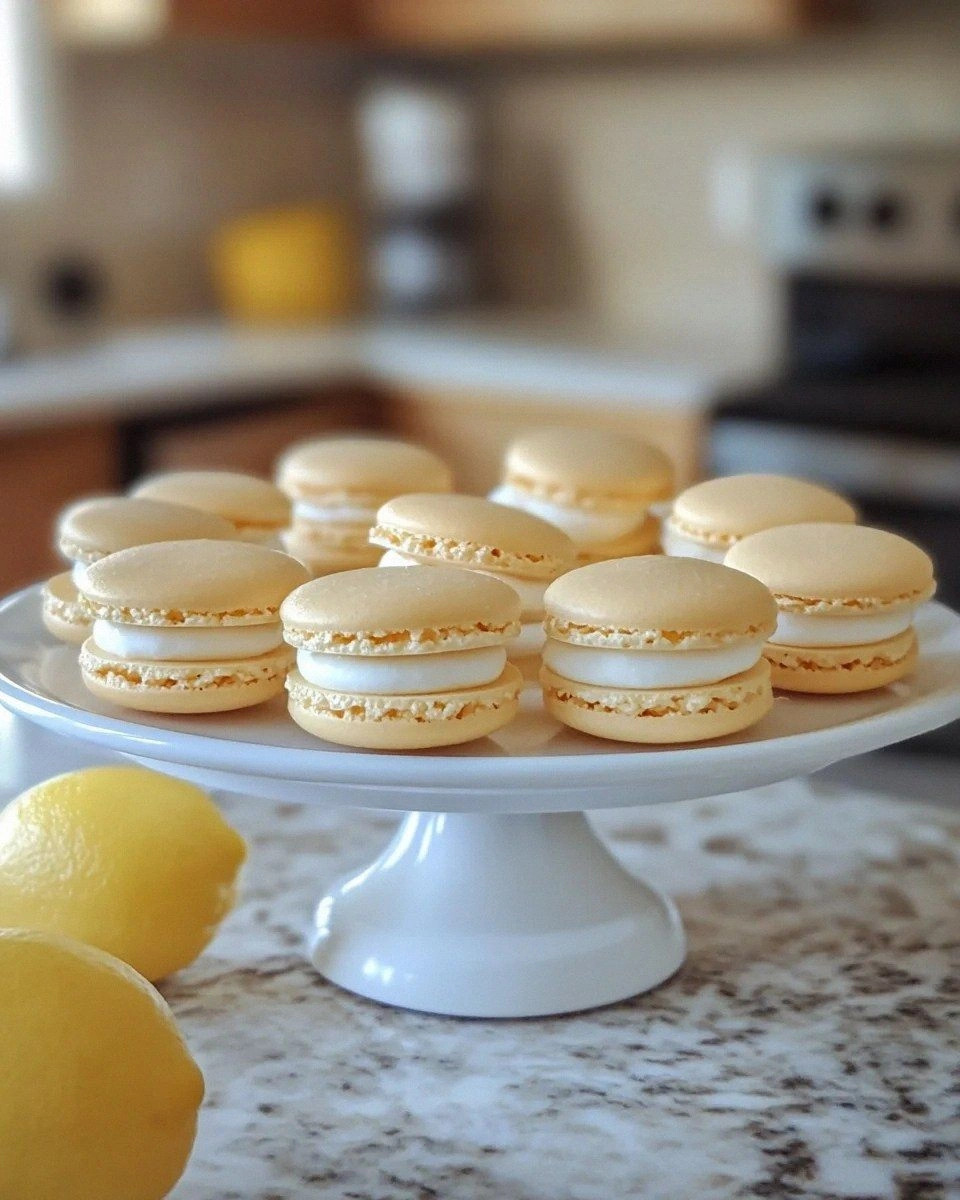
Fast forward to the moment I finally piped the first perfect circle onto the parchment. The shell had that coveted glossy sheen, the “feet” were delicate ridges that rose like tiny sand dunes, and the interior was a buttery, lemon‑infused cloud that practically sang when I bit into it. I dared my roommate to taste one and not go back for seconds, and she immediately confessed she’d been dreaming about lemon macarons for weeks. That was the moment I realized: this isn’t just a cookie, it’s a confidence‑boosting, palate‑awakening, Instagram‑worthy treat that can turn any ordinary day into a celebration.
Most macaron recipes out there either over‑sweeten the delicate almond flavor or end up with a rubbery interior that feels more like a chew‑toy than a confection. I’ve been honest — I ate half the batch before anyone else got a chance to try, because the combination of bright lemon and buttery almond is simply addictive. The secret? A tiny splash of lemon juice added at the very end of the batter, and a precise resting time that lets the shells develop that perfect “skin” before they hit the oven. Most people skip that step and end up with flat, sad shells; we’re not doing that here.
Picture yourself pulling these golden‑tan beauties out of the oven, the whole kitchen smelling like a citrus orchard after a summer rain, and the anticipation building as the shells cool on the rack. The moment you sandwich the silky lemon buttercream between two shells, you’ll hear a gentle “pop” as the airy interior gives way to the creamy filling. Okay, ready for the game‑changer? Let me walk you through every single step — by the end, you’ll wonder how you ever made it any other way.
What Makes This Version Stand Out
- Flavor Explosion: The bright, natural lemon zest cuts through the almond sweetness, creating a balanced zing that awakens your taste buds without overwhelming them.
- Texture Harmony: A crisp, glossy top meets a soft, chewy interior, while the buttercream filling adds a melt‑in‑your‑mouth silkiness that feels like a cloud hugging your palate.
- Simplicity Redefined: No fancy equipment beyond a stand mixer and a piping bag; the steps are broken down so even a novice can achieve professional‑grade results.
- Unique Ingredient Twist: A splash of real lemon juice folded in at the last moment prevents the batter from becoming too stiff, guaranteeing that perfect rise.
- Crowd‑Pleaser Factor: Guests invariably ask for the recipe, and the vibrant yellow hue makes these macarons the star of any dessert table.
- Premium Quality: Using finely ground almond flour and extra‑fine powdered sugar ensures a silky batter that translates into flawless shells.
- Method Mastery: The resting period and precise oven temperature are calibrated to give you those iconic “feet” without any cracking.
- Make‑Ahead Magic: These macarons keep beautifully for up to a week, and the buttercream actually deepens in flavor after a day of resting.
Inside the Ingredient List
The Flavor Base
Almond flour is the heart of any macaron. Its nutty richness provides a subtle backdrop that lets the lemon shine without competing for attention. If you were to skip it or replace it with regular flour, you’d lose that delicate crumb and end up with a dense, cake‑like texture. For the best results, choose a finely ground, blanched almond flour and give it a quick pulse in a food processor to ensure uniformity. A quick tip: toast the almond flour lightly in a dry skillet for 2 minutes, then let it cool; this adds a whisper of caramel that deepens the flavor.
The Texture Crew
Powdered sugar, also known as confectioners’ sugar, works hand‑in‑hand with almond flour to create a silky batter that spreads evenly. Its fine crystals dissolve quickly, preventing any gritty mouthfeel. Skipping the extra sift can result in a lumpy batter that leads to uneven shells. If you’re allergic to corn‑based sugars, opt for a non‑corn powdered sugar; the texture will remain just as flawless. The granulated sugar in the meringue stabilizes the egg whites, giving them the glossy sheen and structure needed for that classic macaron “foot.”
The Unexpected Star
Lemon zest and fresh lemon juice are the surprise heroes that elevate these macarons from good to unforgettable. The zest provides aromatic oils that burst with citrus fragrance, while the juice adds a subtle acidity that balances the sweetness of the buttercream. If you use bottled lemon juice, you’ll miss the bright, floral notes that only fresh zest can deliver. For a twist, try swapping half the zest for orange zest; the resulting flavor is a sunny, slightly floral variation that still respects the original profile.
The Final Flourish
The buttercream filling combines unsalted butter, confectioners’ sugar, a splash of lemon juice, and a hint of vanilla. The butter provides a rich, creamy mouthfeel, while the sugar sweetens and stabilizes the mixture. Skipping the butter or using margarine will result in a runny, unstable filling that can seep out of the shells. For a dairy‑free version, substitute with a high‑fat coconut cream, but expect a subtle coconut undertone. A pinch of salt, though tiny, amplifies the sweetness and brings the flavors into perfect alignment.
Everything's prepped? Good. Let’s get into the real action…
The Method — Step by Step
Start by sifting the almond flour and powdered sugar together into a large bowl. I dare you to taste the sifted mixture before it meets the egg whites; you’ll notice how feather‑light it already feels. This step removes any lumps and ensures the batter will spread evenly. Pro tip: Tap the bowl lightly on the counter to settle the powder, then sift again for an ultra‑smooth texture.
Kitchen Hack: Use a fine‑mesh sieve over a large bowl and give it a quick whisk; this double‑sifts the flour and sugar in one motion, saving you time.Separate the egg whites into a clean, dry bowl—no yolk, no grease, no water. Begin beating on medium speed until they become frothy, then gradually add the granulated sugar while the mixer is on low. Increase to high speed and whip until you achieve stiff, glossy peaks that look like a mountain range at sunrise. The meringue should hold its shape when you lift the whisk, and a faint, sweet aroma should greet you.
Now comes the macaronage: gently fold the sifted dry ingredients into the meringue using a silicone spatula. This is where patience pays off; you want the batter to flow like lava—slow, steady, and glossy. Stop folding the moment the batter falls off the spatula in a thick ribbon that slowly melts back into the bowl. If you over‑mix, the shells will spread too much and lose their iconic “feet.”
Add the lemon zest and the freshly squeezed lemon juice to the batter, folding just enough to incorporate. The citrus will react with the almond base, creating a subtle, fragrant perfume that fills the kitchen. This is the moment of truth: the batter should be smooth, slightly glossy, and hold its shape without being runny. Let the batter sit for a minute, then give it a final gentle stir to ensure even distribution.
Transfer the batter into a piping bag fitted with a ½‑inch round tip. Pipe uniform circles—about 1½ inches in diameter—onto a parchment‑lined baking sheet, spacing them about an inch apart. The key is consistency; uneven circles lead to uneven baking. Once piped, tap the baking sheet firmly on the counter three times to release any air bubbles that may have formed.
Watch Out: If you notice any cracks forming on the surface during the resting stage, the shells have dried too much; reduce resting time by a few minutes.Let the piped shells rest at room temperature for 30‑45 minutes, or until a light skin forms on the surface. You’ll know they’re ready when you can gently touch the tops without any sticky residue. This “skin” is crucial because it prevents the shells from spreading too much in the oven and helps develop those classic feet. While you wait, preheat your oven to 300°F (150°C) and line a second baking sheet with parchment for later use.
Slide the tray into the preheated oven and bake for 12‑15 minutes. Keep the door slightly ajar with a wooden spoon to allow gentle steam release; this helps the shells set without cracking. The edges will start to pull away from the parchment, and a faint, nutty aroma will fill the kitchen. When you gently tap the bottom of a shell, it should sound hollow, indicating the interior is fully set.
Remove the macarons from the oven and let them cool completely on the tray before attempting to move them. Patience is key—trying to peel them while warm will cause them to break. Once cooled, gently peel the shells off the parchment, handling them by the base to avoid smudging the glossy tops.
While the shells cool, whip the butter, confectioners’ sugar, lemon juice, vanilla, and a pinch of salt together until light and fluffy. The buttercream should be smooth enough to pipe without dragging, yet thick enough to hold its shape when sandwiched. Pipe a generous dollop onto the flat side of one shell, then gently press its matching partner on top, forming a perfect sandwich. Refrigerate the assembled macarons for at least an hour; this allows the flavors to meld and the shells to soften just enough for that melt‑in‑the‑mouth experience.
Kitchen Hack: Store assembled macarons in an airtight container with a slice of bread on the side; the bread releases moisture that keeps the shells supple.
That's it — you did it. But hold on, I've got a few more tricks that'll take this to another level, ensuring every batch you make is consistently flawless and utterly unforgettable.
Insider Tricks for Flawless Results
The Temperature Rule Nobody Follows
Macarons are notoriously sensitive to oven temperature. If your oven runs hot, the shells will rise too quickly, creating cracks; if it's too cool, they’ll stay flat. I always invest in an oven thermometer and set the temperature 10‑15°F lower than the recipe calls for, then add an extra minute or two if the shells aren’t fully set. A friend once tried to skip this step and ended up with a batch that looked like pancake crumbs—let’s just say she never tried that again.
Why Your Nose Knows Best
Your sense of smell is an underrated guide during macaron making. When the meringue reaches the perfect stiffness, it emits a faint, sweet aroma that’s almost floral. If you smell a raw egg scent, you’ve under‑whipped; a metallic smell means you’ve over‑whipped. Trusting your nose can save you from a disastrous batch before you even see the batter.
The 5‑Minute Rest That Changes Everything
After piping, let the shells rest for exactly 5 minutes longer than you think you need. This extra time allows a thin skin to form, which is the secret behind those iconic feet. If you’re in a humid kitchen, add a few more minutes; if it’s dry, shave a minute off. The skin should be tacky to the touch but not sticky—think of the feel of a freshly‑kissed peach.
Buttercream Consistency is King
If your buttercream is too soft, it will ooze out of the shells, making a mess. If it’s too stiff, it won’t spread, leaving an uneven bite. To achieve the perfect consistency, start with softened butter (not melted) and beat on medium speed for 2‑3 minutes before adding sugar. Then, increase to high speed for another minute to incorporate air, resulting in a fluffy, pipe‑ready filling.
The “One‑Minute” Oven Door Trick
Opening the oven door for even a second can cause a sudden temperature drop, leading to cracked shells. If you need to check the macarons, do it quickly and use a flashlight to avoid lingering. Better yet, set a timer with a gentle alarm and trust the process; the oven’s heat will stay consistent, and your shells will thank you.
Creative Twists and Variations
This recipe is a playground. Here are some of my favorite ways to switch things up:
Lavender Lemon Dream
Swap half of the lemon zest for culinary lavender buds, and add a teaspoon of dried lavender to the buttercream. The floral notes complement the citrus, creating a sophisticated flavor that’s perfect for spring brunches. Pair it with a glass of chilled prosecco for an elevated experience.
Matcha‑Infused Green
Replace the lemon zest with 1 tablespoon of high‑quality matcha powder, and add a splash of matcha‑flavored buttercream. The earthy green hue is striking, and the subtle bitterness balances the sweetness. This variation is a crowd‑pleaser for tea‑time gatherings.
Chocolate‑Lemon Fusion
Fold 2 tablespoons of melted dark chocolate into the batter before piping, and swirl a thin layer of chocolate ganache inside the lemon buttercream. The combination of rich cocoa and bright lemon creates a dynamic contrast that feels both decadent and refreshing.
Berry Burst
Add a spoonful of raspberry puree to the buttercream and garnish each macaron with a fresh raspberry half. The tart berry amplifies the lemon’s acidity, delivering a burst of summer flavor that’s perfect for picnics.
Spiced Orange
Swap the lemon zest for orange zest and add a pinch of ground cardamom to the batter. The warm spice adds depth, while the orange brightens the palate. This variation shines during holiday gatherings, offering a comforting yet lively taste.
Storing and Bringing It Back to Life
Fridge Storage
Place the assembled macarons in an airtight container and store them in the refrigerator for up to 5 days. The cool environment keeps the buttercream firm and prevents the shells from becoming soggy. Before serving, let them sit at room temperature for 15‑20 minutes; this restores the buttery melt‑in‑the‑mouth texture.
Freezer Friendly
If you want to make a batch ahead of time, freeze the assembled macarons in a single layer on a parchment sheet, then transfer them to a zip‑top bag. They’ll keep for up to 3 months. To revive, move them to the fridge for an hour, then bring to room temperature; the shells will regain their crispness.
Best Reheating Method
When you’re ready to serve, give the macarons a quick 5‑second blast in a 300°F (150°C) oven. Add a tiny splash of water to the oven tray (just a few drops) to create a brief steam burst; this re‑hydrates the interior without making the shells soggy, resulting in a freshly‑baked feel even from the freezer.